Friday, June 20, 2014

Allergic reactions...that turn into Codes.

You can call me a coward, but there are some situations I hope I never have to face as your friendly neighborhood paramedic. I'll train for them so I'll be prepared if they come, but I pray they don't happen when I'm on duty. Firefighters, EMS personnel and law enforcement officers come across extremely sad and often gruesome situations as a regular part of the job. So often, you show up and even with all of your training and expertise there are situations where you don't know what to do and sometimes there is absolutely nothing you can do. These kinds of situations take an emotional toll on those entrusted with handling them. 
Wildflowers

Running cardiac arrests is a fact of life as an EMS provider. We call them codes. Usually, if they are dead when we get there, they tend to stay dead. We do our best, but few un-witnessed codes actually end in a "save." In my five years with the Rescue Squad, I've been on at least 6 codes, not counting the one described below. Only one of them made it to the ER alive, but he died in the ICU a couple days later. The one that died in front of us...well, he had a massive Pulmonary Embolism (blood clot in the lungs) and never had a chance. I've never truly had a cardiac arrest "save" who made it home from the hospital...until this week.

This past week, I was on duty as the regional medic in the west end of Loudoun County--Region A. Think of this as being the EMS equivalent of a K-9 unit. In the 1/4 of the county that I cover, there are a lot of ambulances with EMTs, but I'm the only medic--or ALS provider. If I need a medic for backup, they are about 15 minutes away. To continue the story...I'd gone out to dinner with the ambulance crew from my station. It was a hot, muggy day and a large storm center had just hit the town we were in. Thunder, lightning (lots of ground strikes) and a huge downpour. 

In the middle of this, our food had just arrived when the tones were dropped at 19:28 for a 15 year-old-female having and allergic reaction w/trouble breathing at another restaurant in town about 1/2 mile away. I had a bad feeling about this one, and beat the ambulance to the scene by about a minute. As I pulled into the parking lot, the mom came running out into the storm to tell me the girl was barely breathing. I unlocked the drug cabinet on my chase vehicle, grabbed my drug bag and went into the restaurant. The girl was lying there on the floor next to the bench near the entrance breathing like a fish out of water. I didn't have enough time to give her anything before she stopped breathing. Praise God the ambulance crew came in just then, because respiratory arrest very quickly turned into cardiac arrest. We did CPR for about 2.5 minutes before we got her back, and went through the allergic reaction protocol. 

Another medic just happened to be at the restaurant and jumped in to help. I was incredibly glad to have him there helping because the next closest medic was coming from 12 miles away and I needed help yesterday. We got her to the hospital alive (she was complaining that her chest was sore), although three minutes out from the hospital the medications wore off and in less than a minute she breathing like a fish out of water again. We were assisting her breathing with a BVM again by the time we arrived. She was quickly sedated, intubated and placed on an Epinephrine drip by the ER doc before being transferred to a children's hospital. She was extubated about 11:30 that night, was discharged from the hospital later the next day. For me, this allergic reaction code was a big deal. Not only was it the first severe allergic reaction I have run since getting released as a medic, not to mention the first code, but the patient was the same age as my youngest sister. Very scary. All things considered, the call went well. Praise God this one ended so well!

I've found several ways to de-stress after a significant call like this one. Usually after a call like this, I end up reviewing and criticizing the actions performed on scene to see what can be done better the next time. But when that's over, it's time to deal with the stress. Some form of exercise usually works, running, swimming, hiking, taking a ballet class. I also like to make a trip to the library for a new book and will spend hours working on my garden while listening to music. This time around, I picked up a book on the science behind the Sherlock Holmes stories. As for music, I'm currently into a CD of harp concertos I picked up from a thrift store and the soundtrack for Captain America: The Winter Soldier that I found on YouTube. The garden looks lovely now after a bit of cleaning up.

Thursday, April 24, 2014

On Thomas Jefferson, Peas, and Getting Called Out of Church

I remember reading that Thomas Jefferson was an avid gardener (of course his garden was gigantic compared to mine!). One of his favorite vegetables was English Peas and he had a friendly competition with his neighbors to see who could have the earliest ones. So I looked it up--he grew 15 different varieties! (Check it out here: http://www.monticello.org/site/jefferson/fun-fact-peas). I planted peas this year, on April 5th. Too bad I only have space for one variety. And they started poking their little leaves up April 16! I meant to take a picture several times, but kept getting distracted and forgetting.

I did not forget to take pictures of the cherry blossoms in Washington D.C. this year. Unfortunately pictures like the one below cannot do them justice.

This particular tree in full bloom was located next to the tidal basin near the Jefferson Memorial.
I've been enjoying the privilege of being the regional medic and having a chase vehicle. It means that if I run on a Sunday day, I can take the ALS chase car and go to church.  I take a radio or minitor and my phone, turn the volume down as low as I and sit near the back so I can get out fast without disturbing too many people. Unfortunately this plan has backfired on me a couple times and I have had to leave the service rather abruptly. Like on Palm Sunday.

I heard that one go out about halfway through the sermon. It was for a hand injury--initially BLS. Some guy was doing training and got the tip of his finger pinched off. I had a feeling I'd be going on that one and sure enough, they called for ALS. Nothing really I could do when I got there. It was a frustrating call on numerous levels. Turns out the hand doctor was not able to reattach his fingertip. Oh well. You win some and you lose some. All you can do is your job to the best of the ability God has blessed you with.

Have had some "good" calls the past few weeks. Let's start with the typical definition of a "good call" from the medic's standpoint. A bad call is one where things do not go smoothly. And average call is one where things go well, but the reason you were called is not notable. Like getting that 3am "I stubbed my toe 4 hours ago" or also at 3am "I've been short of breath for 3 days and nothing has changed but it's now an emergency because I can still talk your ear off non-stop for 5 minutes without getting short of breath" call. Yeah. Then you have calls where the illness or injury is genuine. That finger amputation call was good except that things on scene were a bit messy. Seems like I've been going through a steep learning curve after being released.

For example, there was the first time I gave pain medication after being released. This tough little lady fell off her horse in the middle of a field. The ambulance got there first and if a) someone hadn't showed me where to go and b) the ambulance crew hadn't been standing right next to her, I would never have found her. The grass was at least a foot tall and you couldn't see her. She'd broken her ankle. It was extremely painful, swollen and deformed. I wasn't able to completely remove her boot and there really was no good way to splint it. I started my IV and gave her pain medication out there in the deep grass. Unfortunately it didn't do her much good. We eventually got her to the hospital and even three doses of pain medication later it barely took the edge off her pain. In all honesty, she warned me she had a high tolerance for pain medication. I wish I could have managed to splint her ankle better, but she refused to let us touch it and it was going to take us forever on scene. I have a feeling it would have helped with the pain though. Next time.

So much for that. Been rather busy with hospital rotations for paramedic class lately. Speaking of paramedic class, I'd better get going. More homework to do.

Friday, March 21, 2014

Spring Cleaning, Shamrocks and Drug Keys

So spring finally happened. It came much later than I would have liked. Not that I wasn't enjoying winter, it's just that I finally got really tired of being cold all the time. I mean, how could one not enjoy this?!

The famous Rescue Squad snowmen in the making.
Almost done, just needed a few more finishing touches.
Finally done. See?! Poor snowman got impaled by a dead tree branch and had to be rushed to a trauma center by the snow medics for emergency surgery. They've done everything right to include exposing the injury, using full spinal precautions and placing the patient on O2. The patient was too cool for all this and insisted upon wearing his sunglasses during the trip. :-)

I've been so busy with precepting out as a medic in Loudoun that I really haven't had much time to work on my garden. But the hard work and time paid off--On March 17, I was finally released by the EMS council and I was finally issued a pair of shiny new drug keys! I was working the day they were issued, and I was incredibly excited and so worried that I wouldn't get them right away. The medic who was supposed to get them to me was flying out at 6 am the next morning and work was super busy--and I had a rescue squad shift the next day. If I wasn't able to catch up with him that evening, I'd have to wait until the end of the week to get them. I shouldn't have been so worried. I managed to meet him at the ED while I picked up yet another patient going to Fairfax Hospital and  I was finally officially a released Loudoun County medic!

My new keys...and well used PTS ambulance. ::huge smile::

Since I've been so busy and it's been so cold, I haven't done much with the garden yet. We've had some interesting things going on--namely the pipes in the apartment complex froze and broke at the beginning of January. Since we live on the ground floor, all the water naturally drained into our place. We were living out of a hotel room for about 3 months and almost all my plants died. Spring cleaning was fun--moving back in and trying to get the remainder of the flood damage cleaned up.

So I acquired a new plant to start the garden back up again.


It's a little shamrock plant--Oxalis to be more precise. It has beautiful white flowers and so far has been rather tolerant of not getting watered as regularly as it should. Something about me being very busy with paramedic class homework and rotations. Speaking of which...I'd better get busy.

Monday, February 3, 2014

Choosing Plants is Easier than Choosing a New Car

Last week through an unfortunate series of events, my car was totaled in an accident. So I've spent a good portion of last week when I wasn't doing rotations or precepting searching for a new one. By the time church got out this morning and it was time to go back into car shopping mode, it was the last thing I really wanted to do. I honestly thought I knew what car I wanted to get earlier this week. Now I'm not certain.

Turns out that car shopping and plant shopping are somewhat similar. I need a car that I can afford without a big loan, is reliable, gets good enough gas mileage so it won't break the bank when I have to fill it up every week, has excellent safety ratings, low maintenance costs, does well in snow... In addition, I want a car that handles very well--turns tightly, accelerates and slows down well, and has a a sunroof and manual transmission. I still don't know what I'll end up with--essentially it's all going to depend upon availability and price.

Choosing the plants for my kitchen garden is similar--it usually comes down to availability and the cost of plants and seeds. The varieties you start from seed may or may not survive long enough to make it into the garden, so it often comes down to what the nursery has available. Because I have very little space to work with and watering is such a chore, I have to take those factors into account in addition to the climate region the plants will be living in since I keep them outdoors. Disease resistant and heirloom varieties are usually best. Heirlooms have been around for a long time because they taste good. And diseases and pests can destroy the harvest. I usually choose dwarf varieties because my biggest problem is space.

One dwarf tomato variety I've enjoyed growing and plan to grow again this year (I did not take and do not own this photo) is called Tiny Tim. It's a very compact cherry tomato. Last year I had another dwarf patio tomato that produced tasty golden yellow fruit.


Herbs usually don't take up a lot of space. Planting several commonly used varieties in a window planter that can be pulled inside during the winter is a great way to A) have a constant supply of fresh herbs, and B) decorate. Here's a photo of my planter from last summer: 

From L to R: Thyme, Rosemary, Parsley & Oregano
In two separate pots I had chives (a perennial) and several different varieties of basil. Plan is to  start by rehabilitating the herb garden next week since it's still too cold out--in between work & car shopping. We'll see how well that goes...

Sunday, February 2, 2014

The Plant I Didn't Have Space For

There was one thing I wanted to grow last year that I didn't have enough space for. I wanted to grow pumpkins. Something about growing the popular big orange winter squash for decorating and eating is really satisfying. Unfortunately, pumpkin vines take up an awful lot of space... Oh well. When I was eighteen, my younger sister and I both tried to grow the largest pumpkin for the Los Angeles County Fair biggest pumpkin competition. Her pumpkin was 3 inches bigger around. Mine was 2 pounds heavier. I won the competition because they measured by weight. She was really annoyed!

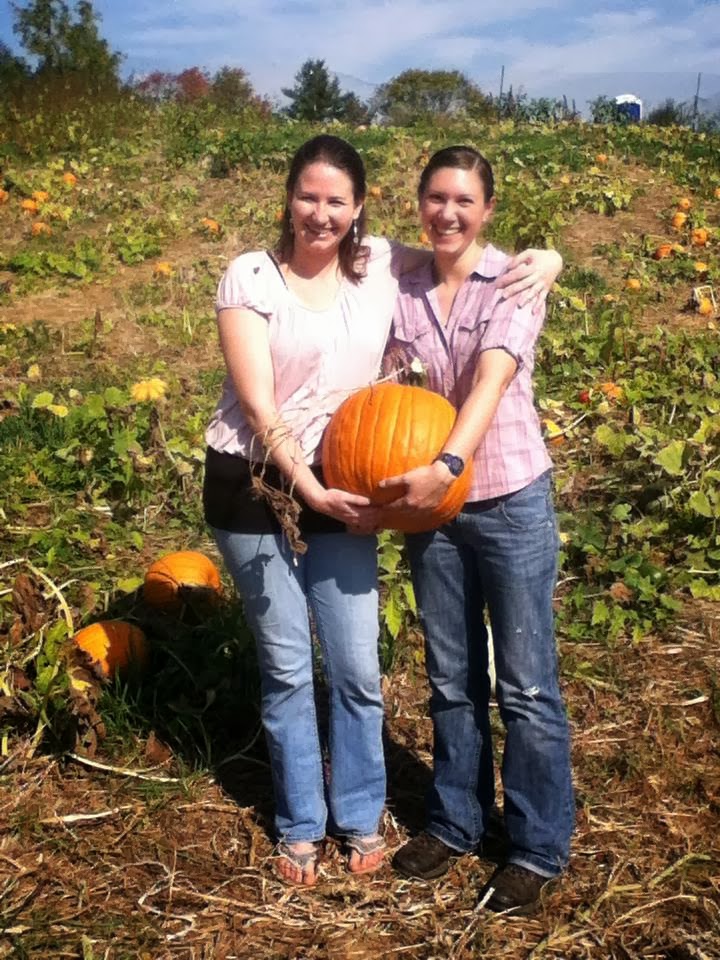
So this past fall, in between work and medic precepting shifts, I grabbed my roommate and a couple friends I know from the fire station and we took advantage of having local pumpkin farms.


I've never really been into pumpkin carving. I prefer to cook and puree the pumpkin so I can eat it.  But I was doing a favor for a friend at another volunteer rescue squad in my county and each crew gets an pumpkin to carve for a in-station competition. The other medic and I put our heads together and the result was a pumpkin with a Second Degree Type I heart block.


A Second Degree Type I heart block is characterized by increasing distance between the P-wave (the first small bump) and the QRS complex (the big up & down one) until there is a missed beat. I ended up carving a shallow 1/4in wide line in the outside of the pumpkin and then filling it with coffee grounds to make it easily visible.


I still had six pumpkins to use back at home. I've made lots of pumpkin pie but since I had never made pumpkin bread before and none of my cookbooks had a recipe, I looked online and found this wonderful one: 


theme
Downeast Maine Pumpkin Bread
recipe image
Rated:rating
Submitted By: Laurie Bennett
Photo By: DetectiveL
Prep Time: 15 Minutes
Cook Time: 50 Minutes
Ready In: 1 Hour 5 Minutes
Servings: 24
"The classic moist pumpkin bread from Down East is spiced with cinnamon, ginger, nutmeg and cloves. This bread improves with age, so plan to make it a day ahead if possible."
INGREDIENTS:
1 (15 ounce) can pumpkin puree
4 eggs
1 cup vegetable oil
2/3 cup water
3 cups white sugar
3 1/2 cups all-purpose flour
2 teaspoons baking soda
1 1/2 teaspoons salt
1 teaspoon ground cinnamon
1 teaspoon ground nutmeg
1/2 teaspoon ground cloves
1/4 teaspoon ground ginger
DIRECTIONS:
1.Preheat oven to 350 degrees F (175 degrees C). Grease and flour three 7x3 inch loaf pans.
2.In a large bowl, mix together pumpkin puree, eggs, oil, water and sugar until well blended. In a separate bowl, whisk together the flour, baking soda, salt, cinnamon, nutmeg, cloves and ginger. Stir the dry ingredients into the pumpkin mixture until just blended. Pour into the prepared pans.
3.Bake for about 50 minutes in the preheated oven. Loaves are done when toothpick inserted in center comes out clean.
ALL RIGHTS RESERVED © 2014 Allrecipes.comPrinted from Allrecipes.com 2/1/2014

I made it as directed except for replacing half the oil with applesauce and using 8"x4" bread pans. It turned out very well and I ended up making a big batch and giving it as Christmas presents.

I don't have a plan for this year's garden drawn up yet, but I'm not planning on having a space for a pumpkin vine. It's more cost effective to grow tomatoes, cucumbers and zucchini. 

Saturday, February 1, 2014

Starting a Garden on an Apartment Patio

Everything begins somewhere. My gardening experience started when I was a child helping my mom and younger siblings plant a garden in sunny southern California--where there are two seasons: the sunny season and the rainy season. My medic experience began Spring 2009--not long after I was first one scene when my youngest brother was hit by a car in front of our house and broke his arm.

 I didn't realize how much I'd miss gardening until I left for college in Virginia. Within two months I had a pansy growing on my windowsill. Six months later I had a small herb garden and a long-suffering African Violet. During my second year of college, I started volunteering with a local rescue squad and became an EMT. I loved learning about the anatomy and physiology, but unfortunately, they didn't cover enough of it to satisfy my curiosity. So after graduating from college and volunteer fire school (yay for being a smallish girl in turnout gear kneeling on top of the hose to control it), I got a job with a local ambulance transport company, moved into a small condo with two friends from college, and went to school for EMT-Intermediate Spring of '13 and graduated last summer. Finally I learned more about anatomy and physiology! To help deal with the stress of class, I started running and expanded my small potted garden. My schedule was ridiculous, and I only had a few hours here and there to work on the garden.

Last year, the garden began with a packet of tomato seeds. I found a dwarf tomato variety that was perfect for a pot. This is a different variety, but ended up in a pot on my patio as well.


Our condo is on the ground floor and includes an approximately 8x10 ft concrete patio outside a sliding glass door. There was a small area of grass between our patio and a neighbors patio (3.5x4ft) that I decided to turn into a small vegetable patch. 


As soon as the ground thawed in February, I started by removing the top layer of sod. Turned out there was a 6in layer of gravel 4in beneath that layer of sod...yay. It took me two months to painstakingly pick out pieces of gravel out so I could dig up another 8in of soil. 


Sometime in May, I found a beat up old rocking chair by the dumpster in the apartment complex. It soon had a permanent home on my patio. It was so relaxing to come home after Intermediate class or a long hospital rotation, go for a run on the trail, spend half an hour working on the garden, and then sit in the rocking chair watching the sunset and the fireflies after dinner.


By the end of the summer, I had about thirty-eight pots of varying sizes containing a variety of flowers and vegetables.


I choose to use a mixture of organic and commercial fertilizer and pest control products. They worked for the most part, but I still had a big problem with mealy bugs. A swallowtail caterpillar made it's home in my Parsley and two praying mantises took up residence in the garden in April, and helped with pest control.


 In late June, I started to get my first harvests. The most difficult thing was keeping everything watered. There is no outside hose. So it was a daily thirty-minute chore to haul the requisite eight gallons of water using a watering can (I have two of them: a 1/2 gallon and 2 gallon) from the kitchen sink to the garden. 


By August, the place was starting to get overgrown. The tomatoes were too tall for their stakes--eventually breaking the stakes and my zucchini plants were trying to knock down the little wire fence surrounding them.  

My cucumbers had reached the top of their trellis and were going down the other side. I started giving produce away because my roommates and I couldn't eat it before it went bad.


 By October, pretty much everything I'd planted was done. By then I was precepting as a medic at work and with my volunteer rescue squad, had just begun an Intermediate to Paramedic bridge course and was taking a condensed (8-week) college level Anatomy & Physiology class. The cold weather had killed off most of the annuals, so I left the pots sitting out for the winter.

As soon as the ground thaws enough for me to dig in it, (hopefully later this month) I'll start turning it over getting ready for planting in the spring. I can't wait.