Showing posts with label volunteer firefighter. Show all posts

Tuesday, August 2, 2016

Bringing Some Peace & Quiet To The Patio

Materials for my fountain
Last week I spent a few minutes organizing my bookshelves and found some books on water gardening I'd picked up for a dollar at the thrift store. I've always wanted to have a water garden. Something about the sound of running water is really soothing. A little research proved that it's not very expensive to start one. So over the last couple weekends, it happened. 

I started with at trip to the hardware store.  Everything I needed is shown in the photo above: fountain pump, planter bowl, drill (to widen the hole in the bottom of the planter so the cord would fit through), rocks to hide the pump, and of course water (not shown).

I started with at trip to the hardware store.  Everything I needed is shown in the photo above: fountain pump, planter bowl, drill (to widen the hole in the bottom of the planter so the cord would fit through), rocks to hide the pump, and of course water (not shown).

Fountain pump.

The pump I got came with a couple different nozzles to change the spray pattern for the water. Not all of them come with it. There's also different sized pumps depending upon how much water you want to move and how high you want to make it go.

Enlarged hole for the pump's cord.


Step one was to enlarge the hole in the bottom of the pot so I could run the cord for the pump through. This isn't exactly necessary, but I thought it would make the finished fountain look better. I had a rubber plug already fitted around the cord to make the hole water-tight, but not all of them are that way. It is also common to use some sort of sealant to close up the hole around the cord.

Pump placed in pot and hole around the cord sealed with rubber plug

Initial finished fountain
I didn't like the way it looked with just the rocks in this photo because the pump was still visible. I found a wire basket at the dollar store, cut a hole in the center and placed the overturned basket over the pump. This keeps the rocks from blocking water flow to the pump and reduces the amount of rocks I need to hide the pump. I added more rocks until the basket was no longer visible.

Finished fountain!
I'm planning to eventually add plants to the fountain. Until then, I think this will work fine. I have been running the fountain almost once a day and draining the entire fountain and cleaning it to prevent algae from growing.

Fountain in the corner with (L-R): Geranium, White Oxalis, Citronella plant (far back), cactus garden, Purple Oxalis, and Asian Jasmine.
Due to all the turmoil that goes along with a new job, I haven't been able to spend time running rescue or doing paramedic-y things other than working on the re-certification process. Re-certification has to be done every two years in order to maintain National Registry certification. There are a bunch of different topics that you need to receive training in, for a total of 60 hours of training. I have about 8 months to complete 5 hours of training. Easy enough. Until I get back into the field on my own as a medic with my new job, it's time for more garden therapy. Until next time...

Sunday, May 1, 2016

Patio Herb Gardening

I know it's been awhile since I posted, but I got a new job a few months back. Consequently, I'm preparing to move again and I've been in training, so I haven't had much time to write. I am happy to report that I have managed to keep a few plants alive despite being extremely busy studying for exams.

These past couple months, the anniversaries of a handful of difficult calls came and went. I've found that memories seem to pick their own time and place to resurface. And it is sometimes difficult to put them to rest. Each time they are brought out of the proverbial closet and worked through, it gets easier to handle. I like to think this process is comparable pruning. Plants are much healthier when trimmed and pruned regularly. And yeah, I prefer to do something constructive while working through things...like gardening. Particularly, working with herbs because they smell so good. Aromatherapy anyone?

One of my favorite planters is my herb box. I started with a light gray plastic window box planter about 5 years ago. The plant arrangement has remained more or less the same since then. I managed to fit four different varieties of herbs comfortably in the box. It isn't my only pot of herbs though.

Gray window-box of herbs in 2012. From L-R:
Lemon Thyme, Rosemary, Parsley and Oregano
Since some of these plants are perennials and some are annuals, I've had to replant the ones that die each year. For home cooking, here's a rundown on six of the most useful herbs to grow.

Thyme: Thyme is an annual (meaning it has a seasonal life cycle and dies after it's flowered and produced seeds), and comes in many varieties. Some of my favorite varieties are Lemon Thyme (lemony smell), Elfin Thyme (tiny leaves and typically used as a ground cover), English Thyme, and Silver Lemon Thyme (which has a silver leaf edges). Thyme likes plenty of sun, hates it when you let the soil get dry and does well when fertilized once a week. I try to trim it pretty regularly and I usually dry whatever I can't immediately use.
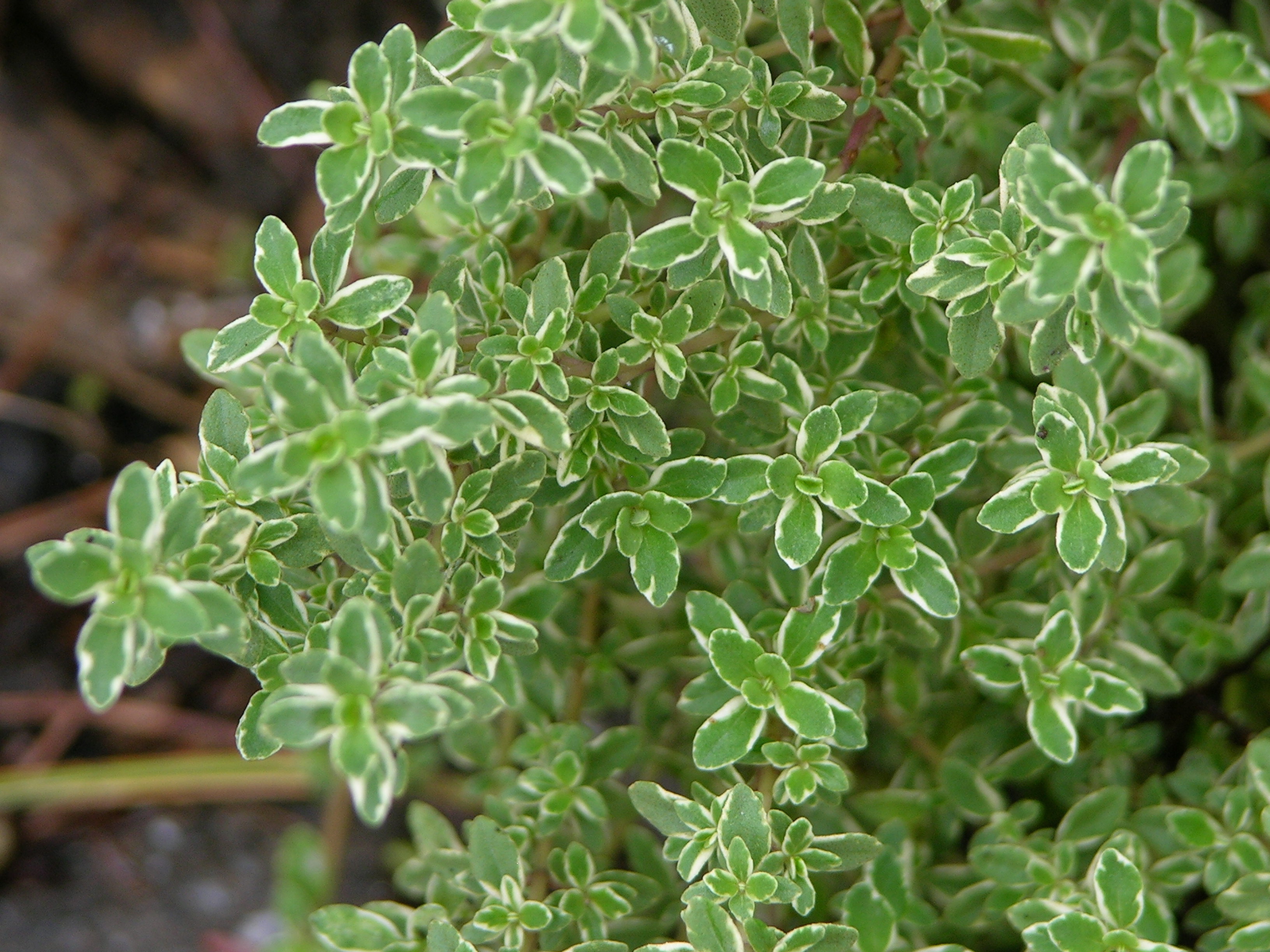
Varigated Lemon Thyme
Rosemary: Rosemary (pictured second from left in the photo of my planter) is a perennial. Perennials have a longer life cycle lasting 2-3 years. Actually, Rosemary can be more of a shrub and is sometimes grown as a hedge. It doesn't like too much water, loves sun, likes to be fertilized regularly and will take over a planter if you aren't careful. Rosemary can be trained into topiary, trimmed into all sorts of shapes and grow into a huge bush 4 feet tall and as big around. It goes very well with chicken, and is awesome in spaghetti sauce. Because a happy rosemary plant grows like a weed, I usually plant it in a small plastic pot and then plant that smaller pot in my planter. This helps keep it from completely taking over my planter. I trim it regularly and usually dry whatever I can't use. The oils in rosemary leaves can sometimes be hard to get off your hands. Dawn dish washing soap works pretty well for that, but I also like to wear gloves if I don't want my hands to smell like rosemary for the next day.

Parsley: Parsley is another annual. It is a versatile herb used to make all sorts of dishes. It isn't quite as strong a flavor as rosemary, and while it loves sun, don't let it dry out. If it dries out (which almost always happens in hot weather since it needs a ton of water), it tends to bolt and be in an awful hurry to produce seeds. Once it bolts, you won't get many good leaves off it for cooking. There are several varieties of parsley, but the two I've seen most commonly are those with a flat leaf or a curly leaf. I prefer to grow the flat leaf variety since I find it a lot easier to wash all the dirt off the flat leaves. Parsley is also the host plant for many swallowtail caterpillars. While swallowtail butterflies are beautiful, I don't like having my parsley eaten by somebody other than me!

This is Italian Flat-Leaf Parsley from  the Bonnie Plants website: https://bonnieplants.com/product/flat-italian-parsley/.
Oregano: Oregano belongs to the mint family and I think it is considered a small shrub. It's definitely a perennial--my current plant is several years old. It is a key ingredient in Italian dishes. I've tried several different varieties including Greek (very strong flavor), Italian, Golden (yellowish leaves) and Varigated (silver edges).  I prefer to grow Italian Oregano because I like the flavor. Oregano will tolerate you letting the pot get dry, but it definitely prefers getting water regularly. Fertilizing and regularly trimming it back (especially when it wants to flower) allow you to harvest the leaves for a longer period of time.

Basil: Basil is another annual that tends to bolt if it's pot dries out. Regular watering, fertilizing, trimming and TLC will make this fragrant herb quite happy. Since it's life span is shorter than most of the other herbs I grow, I like to keep a separate pot with multiple varieties of basil. Some of my favorite basil varieties are Purple, Cinnamon, Thai, Lemon, Lime, Spicy Bush (bushy plant with lots of small leaves), and Sweet Basil (the plain kind). I trim my basil plants every other week or so and dry anything I can't use right away.

Purple, Thai and Spicy Globe Basil 
Chives: Chives are another of those perennials that will be around forever if you take care of it. It likes plenty of water and sun and being fertilized once a week. Chives are a member of the onion family and the hallow leaves are picked and used for a dainty onionish flavor. I don't trim or dry my chives, although you can do both. I prefer to pick only the largest leaves when I want to use them for cooking. I usually thin and re-pot my chives once a year.

Chives (front and center)


Did I mention that my cat loves to play in my herb garden? She makes a mess but smells really nice when she's done.
Minerva used to be soooo tiny! And she is most certainly up to no good...

Friday, October 30, 2015

The Complete Idiots Guide to...STEMIs?

When I was a kid, a family friend gave us a wooden chess set and a book titled "The Complete Idiot's Guide to Chess." While we definitely aren't complete idiots, that book broke down a complex game into concepts we could understand.  We had so much fun learning to play chess... After awhile, it becomes easy to play the game and you can start focusing on more important things: like strategy. I find that doing the same thing for complex medical conditions or trying to learn how to cultivate bonsai (Bone-Sigh) plants helps. If I can explain it so a layperson can understand, then I generally have a good grasp of the subject.

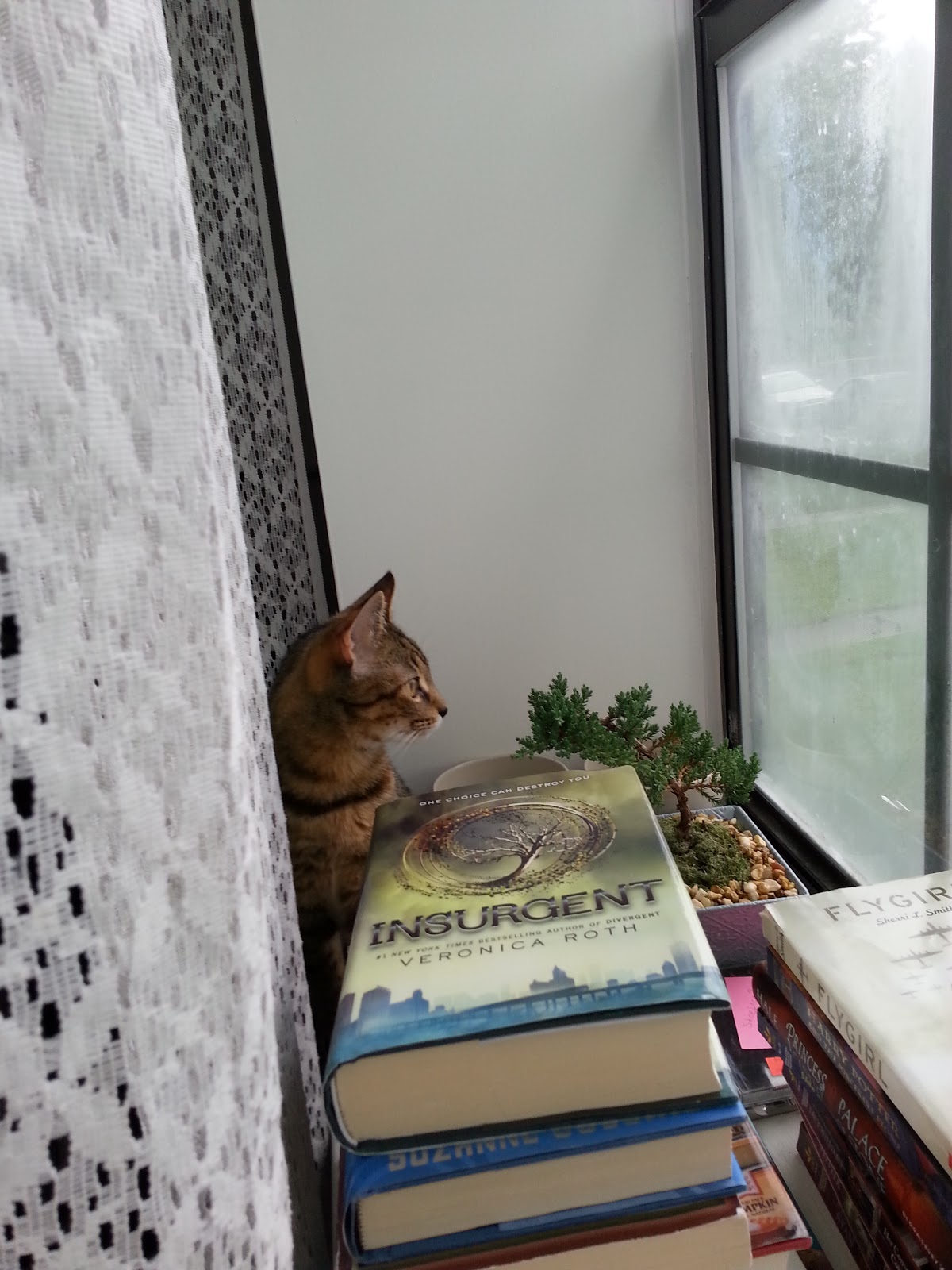
Minerva watching it rain while trying to ignore a bonsai tree I was trying (and failed) to keep alive.
So the last couple weeks, I put in a decent amount of time as the Region A medic. I missed the lunar eclipse (which was also a full blood moon) because well, as folklore says, wild things happen on the night of the full moon. I was so busy running calls and writing my reports that when the clouds cleared I still didn't get a chance to see it. The theme of my last couple weeks seems to be responding for complaints of "chest pain."

Current medical practice in response to chest pain is very different from what it was 50 years ago. Fifty years ago, if you started having chest pain and you picked up the phone to call someone to take you to the hospital, you probably would have dialed your neighbor's house instead of 911.

I think that comparing the chest pain protocol suggested by the American Heart Association with common practice in 1965 might be enlightening. Please note that different jurisdictions have different protocols and may prefer to use different medications. This is normal, but the goal is the same. (And to anyone in the medical field who reads this, feel free to message me if I get something wrong. I'm happy to make corrections).

Let's start with some terminology: the medical term for a heart attack is an Myocardial (My-O-Car-Deal) Infarction (In-Fark-Shun) which is abbreviated to MI. When someone has a major medical event of any kind, we typically monitor their heart activity with an Electrocardiograph (Electro-Cardio-Graf) machine which is abbreviated either as EKG or ECG. There are two kinds of MI: ST-segment Elevation MI called a STEMI (I pronounce it Stem-Ee) and Non-ST-segment Elevation MI, or NSTEMI. I'll discuss the meaning of the ST-segment later.

And no, I don't expect you to remember all this. I also don't expect others to be as fascinated with cardiology (the study of the heart) as I am. 

Diagram of a myocardial infarction (2) of the tip of the anterior [front] wall of the heart (an apical infarct) after occlusion [blockage] (1) of a branch of the Left Coronary Artery or LCA. In the diagram, RCA is the Right Coronary Artery. [Diagram found on Wikipedia.][1]

My protocol dictates that when the patient I've been dispatched to help complains of chest pain, that patient is instructed to take 4 baby Aspirin if available. When I arrive, several things should happen quickly: somebody gets a set of vitals, and I get a 12-Lead EKG reading. Vitals consist of blood pressure, pulse, oxygen saturation, respiratory rate, listen to the lungs and check skin condition (because if the patient is pale, cool and sweaty, it tells me a lot about how sick they are). The 12-Lead is kind of like an electrical picture of the heart taken from 12 different angles. If the patient's blood pressure is above a certain number (and the 12-Lead isn't showing lack of oxygen to the right side of the heart), I will administer the first of up to 3 doses of nitroglycerin and transmit the 12-Lead to the ED for the doctor to look at. If the patient's oxygen saturation is below 94%, I'll have someone put the patient on a little bit of oxygen. At this point I typically like to move everyone to the back of the ambulance because I can do everything else in the ambulance on the way to the ED.

An MI is truly an emergency. The longer that area of heart muscle goes without oxygen (take a look at that diagram above again), the more permanent damage to the heart there will be. So this is one of the cases where I try to keep my time on scene short and sweet. Once in the ambulance with an emergency like this, I have to get vitals every 5 minutes (that's my EMT's job if I have one in the back with me), start an IV, radio the hospital to let them know that they're getting a STEMI, get a follow-up 12-Lead if possible, administer the other 2 doses of nitroglycerin if appropriate, and if that does not help the patient's pain, give morphine. And meanwhile, I'll be talking to the patient and my crew, asking for this or that, and trying to keep everyone calm and as comfortable as possible. If it's a long transport or something important changes en-route, I'll call the ED again to give them an update or to ask the doctor for orders. Oh, and did I mention the paperwork? I have to get patient information for my report and so I have it to give to the hospital so they can register the patient when we arrive.

If you're wondering how I know if the patient is having an MI, it's a combination of the patient's symptoms and my lovely little 12-Lead EKG. There's a whole science to reading and performing those 12-Leads too. First, not all MIs will show up on the 12-Lead EKG. However, most will show up on the EKG, and most of those that don't initially show up on the EKG will show up in the lab test the doctor will run once we get to the ED. And there will always be some that are never discovered--because that's just the way life is, right? The ones that show up on the EKG in the field are typically the ones that I'll be the most worried about. Especially if the patient looks really sick.

If you're curious, here's an example of a 12-Lead done on patient's having active MI's.

Check Anesthesia UK's website for full article "Ischemic Heart Disease"
http://www.frca.co.uk/article.aspx?articleid=100690 
Check Anesthesia UK's website for full article "Ischemic Heart Disease" 
http://www.frca.co.uk/article.aspx?articleid=100690 

Each segment of the heart beat tracing has a letter name.

So when you look back at those 12-Leads, do you see that little portion between the S-wave and the T-wave? In a normal EKG, that little line is parallel with the baseline. But wait, it's NOT on the baseline in some of those tracings. It's either above or below. When it's above the baseline, we call it ST-elevation. When it's above the baseline in several leads that are from neighboring parts of the heart it indicates lack of oxygen to that part of the heart due to a blockage of one (or more) of the arteries (in one or more places) supplying oxygen and nutrients to the heart muscle. And that's why we call it a STEMI.

An NSTEMI is simply where the patient is having an MI but there is no ST elevation in their EKG. NSTEMIs are typically diagnosed by labs run at the ED.

Ever wonder what happens after your local paramedic brings a STEMI patient to the ED? They usually get a couple more medications in the ED that help with preventing more blood clots and then are taken to the Cardiac Catheterization Lab (Cath Lab). In the cath lab, the doctor will place a stent in the clogged artery to allow blood to circulate to that part of the heart again. If that fails, it's open heart surgery and a coronary artery bypass graft. There are an awful lot of people out there running around and living their lives with one or more stents or coronary artery bypass grafts!

Back when the first paramedics hit the streets of America in the 1960's things were different. Medicine has come a very long way in the last 50 years allowing people who would otherwise die the chance for a second lease on life.

As fall hits full swing, the plants in my garden are hanging on. Several of them have new growth. I love seeing the new leaves mixed in with the colorful ones that are falling from the trees. My front porch doesn't look as pretty as some of the back roads around here.


So take a few minutes to step outside and enjoy the weather and thank God for the weather and the beauty of the world.


Saturday, June 20, 2015

A Day (Or Night) In the Life Of A Volunteer Paramedic (Part 2): Night Shift At the Firehouse

It's starting to feel like summer now. It's hot and humid, it sometimes rains, there's been some spectacular thunderstorms. And the days are getting longer. On June 21st it will officially be summer...and I've been hoping spring weather would have lasted longer. I'm already wishing there was an outside faucet and hose at my apartment building...

Garden hose substitute
It takes approximately four gallons to water all my plants every hot morning when it has not rained. Since there isn't a faucet and hose,  I have to haul all that water to the patio from an inside faucet. I use a $2, two gallon bucket from Home Depot and fill it up in the bathtub because the other faucets are two slow and the smaller watering can is gentler on the plants. It's a gamble each time to see if I can get it through the living room to the back patio without spilling. My loving 11mo. Border Collie puppy tends to accidentally get in the way causing a spill on the carpet... ::sigh::

I think I have Fiona's full attention here...
Once I get my bucket to the patio, I fill my 1/2 gallon watering can from the bucket and water the plants. Some pots need more water than others due to the type of plant or the location of the pot. As you can see in the picture below, there are quite a few pots (and you can't even see half of them)!

The garden as viewed from the sidewalk...although you can't see all the pots since they're hidden behind the tall grass.
Some days I have to water a couple times a day due to the weather. Makes me grateful that the days of bucket brigades in the fire service are mostly just history in the US. My blue plastic bucket holds so little compared to the hundreds of gallons that a fire engine carries.

Think about it. Both of the fire engines at my station carry 750 gallons of water. It takes a lot more than 750 gallons of water to put out your average healthy, well-established house fire. And without being connected to a hydrant, the pump can run out of water in a few minutes give or take. Which should explain why parking your car in front of a fire hydrant is a really dumb idea, and why fire departments have tanker trucks (especially in rural areas) and the firefighter driving the engine learned how to "draft" (pump water from a pool, pond, creek or other water source).

Apparatus checks at the beginning of the shift.
So what happens on a typical duty shift at the fire station? Well, the station I volunteer at has six duty crews, which means that the crew I'm assigned to, Crew 4, has duty every six days. The station is staffed during the day by career firefighters, and at night by volunteers. Shift change is 6pm, or 1800 hours. We all arrive as close to that time as possible with our work and class schedules. Upon arrival, we usually meet in the watch office for crew assignments and a quick rundown for the planned evening activities (meetings, training, etc.). Then we head out to do a truck and equipment check before heading out for dinner or training--the two are interchangeable depending upon the season and type of training.

View of Goose Creek just below the Rt. 7 bridge. The water is about knee deep in this picture, and during the incident mentioned above, the patient was located on the large flat rock visible in the center of the creek. 
A couple shifts ago, we were dispatched to assist the medic unit with a reported unconscious person who was reported to have been in the water but was now out of the water. Turns out that some guys were fishing in the creek and one of them had a medical emergency and went down in the water. He was conscious again and had been assisted to a sitting position on the flat rock in the middle of the creek you can see in the picture above. We helped get him out of the water, across the creek and into the ambulance.

I discovered that the bumper line on the engine is a comfortable spot to read... and it was a really engaging book. One of the other guys on my crew took this picture after he came around the engine and jumped because he didn't realize I was sitting there perfectly still. 
I don't bring my dog to the station very often. The vet clinic I take her to is right around the corner from one of the stations, so we occasionally stop by and take advantage of photo opportunities. She's very photogenic if you're holding one of her favorite toys. Border Collie concentration powers at work.

Come on, she's adorable, isn't she?

Fiona is making the engine look good. See? She can put both ears up--if she wants to.
Speaking of which, I have to get on to my next project. Finish one and another one turns up... Fiona wants to go outside. Again. 

Tuesday, May 12, 2015

Patio Garden Therapy

Late last summer, the garden and I moved…to a bigger patio about 8 miles down the road. There’s no space for an actual garden bed here and the management is really particular about what is on your patio. So I’m making do with a few more pots. I also had to get a storage bench to hold my gardening stuff. Not that there’s anything wrong with more pots, beautiful flowers, or a nice reading spot in the middle of them…

Rocking chair and patio tomatoes...and the lovely Fiona with her frisbee.
Back in March, my “black cloud” showed up again, and I ran a series of tough calls. It didn’t seem to matter if I was riding backwards in the bucket seat on the engine, covering as the Region A medic, helping a friend with driver training in preparation for EVOC or having another insanely busy day working at the ambulance transport company. It all began with a code that went out a couple miles from the station Wednesday night.

Every new medic needs at least one confidence-building critical call, where given all the variables everything goes pretty much like clockwork. I’d come down to the station to take one of the new members out in the second out (unstaffed) ambulance for pre-EVOC driver training. Just as we were about to head out, the station tones dropped for a cardiac arrest and an EMT/driver walked in and asked if I wanted to take the call. A quick check showed that we were much closer to the scene than either of the two medics initially dispatched and the first out unit wasn’t at the station. So I grabbed my drug keys, we squirreled it and arrived on scene just after the engine and before all the other EMS units. I grabbed the drug bag, walked in and handed out work assignments to the crew to facilitate the “pit crew method” I heard about at the EMS Today Conference earlier this year. From there it went like clockwork. The patient started in asystole and when we reached the ED 10mg of Epi and 50mEQ Sodium Bicarb later the patient was still in asystole and the doc called the code. Unfortunately, asystole (aka flatline or no heart rhythm at all) is the stablest rhythm of them all.

The next day I was at work, and it was one of those really busy days. One of my patients that shift was a tiny premature baby who had developed necrotizing enterocolitis. Necrotizing enterocolitis is the death of tissue in the intestine and occurs most often in premature or sick babies with a 25% mortality rate according to the National Institute of Health.[i] I checked with the doc in the Peds ED the next week and he confirmed that thankfully this little one was treated in time and survived.

A dressed up patio storage bench turns this corner of the patio into an inviting place to relax outside.
Mama ducky is admiring that orange Gerbera daisy too. 
The next night, after a busy day acquiring the patio storage bench, I had fire duty. Riding backwards on the engine can be fun and a nice break from bossing a medic unit... until you get dispatched on that 2:50am stabbing three doors down from the firehouse, are the only medic on the engine and are first on scene after the police. We did everything we could. This patient's wounds were too severe and he practically bled out in front of us and in the end did not survive. The calls where a patient starts out talking to you and ends up dead are the worst. This one was particularly difficult due to the circumstances.

Needing some version of therapy after those calls, and now that spring had arrived, I started working on the garden again. I still have a few pots I haven’t planted yet. Between turning an old bookshelf into a potting bench and acquiring a storage bench/seat per request from the management company, the patio has become a lovely place to read and work.

New job for an old bookshelf: potting shelf.
The rest of the garden is still in the works, but I have squash, beans, cucumbers and a variety of herbs and flowers growing.

Planter of Basil varieties and the lonely Zucchini plant.

When you spend a significant portion of your time caring for ill, injured and dying people, it's nice to be able to come home and care for something healthy and alive.
Green Beans.
Cucumbers and trellis.

I like to daydream about God being the supreme gardener. He has more plant varieties than I could ever dream of...and He's got the whole universe to grow them in. But you can also think of gardening as an analogy for life. Any gardener knows that caring for a garden requires weeding, thinning, pruning and re-potting. God does the same for our lives. We may not know the master plan for the garden, but He does. And in the end, He works everything together for our good and His glory-- even though we may not see it at the time. In the end, God is the one who gives and takes life. I've gotten to see a decent share of both recently. It's a good reminder that it is a privilege to be alive. Use your time wisely and don't take it for granted. We never know when our time on earth is up. Don't waste your life.

Citronella, Violas and Oxalis (shamrocks) decorating a corner of the patio.
For me, that means doing my job at work or as a volunteer to the best of my ability and then coming home and taking care of my garden... and spending time playing with and training my dog Fiona.

Fiona at 9 months
Besides, who knew Border Collies loved to swim?

Yep...she's out there swimming after a stick.

[i] http://www.nlm.nih.gov/medlineplus/ency/article/001148.htm

Thursday, April 30, 2015

Taking A Break From The Garden: Puppy Time!

Last August I took a break from gardening for a little while after moving. Why? Because I acquired a small fuzzy ball of trouble, mayhem, energy, messes, fun and total cuteness: also known as my Border Collie puppy Fiona Grace or "Fi" (pronounced "fee") for short.

NOTICE: This is your warning that there will be a LOT of puppy pictures in this post.

Last July, I stopped by southern Virginia on my way to North Carolina for some R&R after paramedic class to meet the litter of puppies and decided I wanted the only girl in the litter of four. She was about the size of a Guinea Pig and really cuddly. I spent the next four hours I was driving talking to my car about puppy names. Half the list I'd picked out earlier just didn't seem to fit this little girl's temperament. Finally settled on calling the little princess Fiona because not only is it a traditional Border Collie Name, she was spunky and stood up to all three of her bigger brothers kind of like the character in the TV show Burn Notice. And before you ask, I was completely unaware of the movie Shrek. Never seen it.

Hello world, meet Fiona!
My friend (and fellow volunteer paramedic) ended up getting one of her brothers, so we carpooled down to pick up the puppies in August and my roommate came along for the ride.

Fiona and her brother decided to cuddle with my roommate on the way home.
The next few weeks were a blur. Figuring out puppy-sitting arrangements on the days my roommate and I were both working, vet appointments, starting initial training, socializing her and getting her used to strange loud noises and large objects. With such a busy schedule, she took frequent naps to keep up her incessant energy.

So tired and so small!
She loved to chew. One of her favorite toys was (and still is) this Kong binkie. Especially if it's filled with chunky peanut butter.

Two Months old with Binkie
Four months and the ever-present binkie.
Six Months with Binkie. She's lost the puppy fuzz now.
Taught her to enjoy strange things--like drinking out of a syringe, and normal things like sit, down & stay. Oh, and look at me to so I can take yet another picture with you looking this time.

Two months and drinking water out of a syringe during a visit to the Rescue Squad station.
Three months and I FINALLY have her full attention for a few seconds.
I had her attention in the last picture because I was holding her new favorite toy: a Frisbee. We've gone through about five of these now. She's truly obsessed with the game. She's eight months in this picture.
We've been hiking, pumpkin picking, and visited the fire station I volunteer at. The bells going off or the tones dropping don't even bother her. She's working on getting comfortable around crowds since she's a little shy with new people.

Hiking to Bear's Den at 4 months.

Pumpkin picking at 4 months
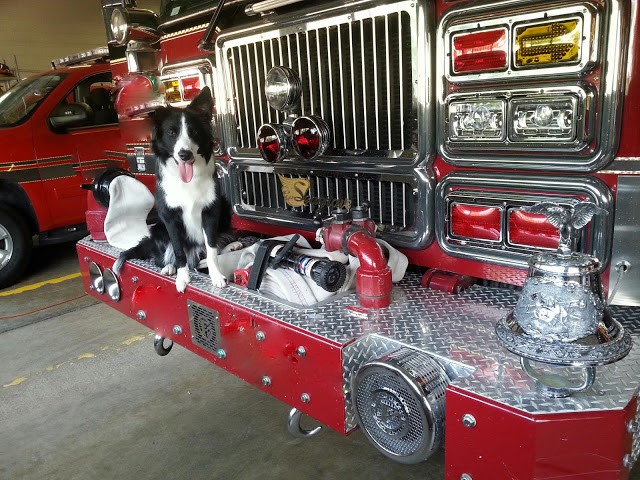
Posing on the front of the engine during a visit to the fire station. Almost five months old.
Posing in one of the chase vehicles for National Puppy Day. Seven Months old.
She's now reached the fine age of 10 months. She's all of about 35 lbs, fast, smart, and totally obsessed with balls, frisbees, and cats. Good old Border Collie instinct kicking in because she wants to round up all kinds of things. Chickens, cats, me... We're getting pretty good at the basic obedience commands. She's a good traveler and I take her everywhere I possibly can. So much fun now that she's patient enough to focus and obey commands!

All a girl needs when going hiking: backpack and faithful canine companion. Fiona is nine months in this photo taken at Bear's Den. 
As you can see, I've had my hands full with this one. She's finally reached an age where her body has grown enough that I can start agility and sheep herding training with her. Going to try obedience competition first though. And then maybe we should try something that involves swimming...

Fiona at nine months. She's on a nice "down-stay" in the middle of a patch of bluebells we found next to the Bear's Den lodge on the Appalachian Trail. Isn't she gorgeous?
At ten months, she's staying cool while playing fetch with a stick in a lake and giving her best "drowned rat" impression.  
Fun and exciting times coming up this summer! Her new thing is to have me throw the frisbee from the patio and leap over my pots to go fetch it. As long as she doesn't tip over all my plants in her pursuit of the frisbee, ball and cat, we'll be fine.

Until next time then...