Showing posts with label NREMT-Paramedic. Show all posts

Tuesday, August 2, 2016

Bringing Some Peace & Quiet To The Patio

Materials for my fountain
Last week I spent a few minutes organizing my bookshelves and found some books on water gardening I'd picked up for a dollar at the thrift store. I've always wanted to have a water garden. Something about the sound of running water is really soothing. A little research proved that it's not very expensive to start one. So over the last couple weekends, it happened. 

I started with at trip to the hardware store.  Everything I needed is shown in the photo above: fountain pump, planter bowl, drill (to widen the hole in the bottom of the planter so the cord would fit through), rocks to hide the pump, and of course water (not shown).

I started with at trip to the hardware store.  Everything I needed is shown in the photo above: fountain pump, planter bowl, drill (to widen the hole in the bottom of the planter so the cord would fit through), rocks to hide the pump, and of course water (not shown).

Fountain pump.

The pump I got came with a couple different nozzles to change the spray pattern for the water. Not all of them come with it. There's also different sized pumps depending upon how much water you want to move and how high you want to make it go.

Enlarged hole for the pump's cord.


Step one was to enlarge the hole in the bottom of the pot so I could run the cord for the pump through. This isn't exactly necessary, but I thought it would make the finished fountain look better. I had a rubber plug already fitted around the cord to make the hole water-tight, but not all of them are that way. It is also common to use some sort of sealant to close up the hole around the cord.

Pump placed in pot and hole around the cord sealed with rubber plug

Initial finished fountain
I didn't like the way it looked with just the rocks in this photo because the pump was still visible. I found a wire basket at the dollar store, cut a hole in the center and placed the overturned basket over the pump. This keeps the rocks from blocking water flow to the pump and reduces the amount of rocks I need to hide the pump. I added more rocks until the basket was no longer visible.

Finished fountain!
I'm planning to eventually add plants to the fountain. Until then, I think this will work fine. I have been running the fountain almost once a day and draining the entire fountain and cleaning it to prevent algae from growing.

Fountain in the corner with (L-R): Geranium, White Oxalis, Citronella plant (far back), cactus garden, Purple Oxalis, and Asian Jasmine.
Due to all the turmoil that goes along with a new job, I haven't been able to spend time running rescue or doing paramedic-y things other than working on the re-certification process. Re-certification has to be done every two years in order to maintain National Registry certification. There are a bunch of different topics that you need to receive training in, for a total of 60 hours of training. I have about 8 months to complete 5 hours of training. Easy enough. Until I get back into the field on my own as a medic with my new job, it's time for more garden therapy. Until next time...

Thursday, July 7, 2016

Traveling, Blueberries & Texas Sunshine

So you'd think that after moving just about once a year for the last couple years, I'd learn my lesson and just pick a spot to settle down. Yeah...about that.

It all started about 1.5 years ago when I decided I needed to start looking for a new job (preferably in the medical field or related to it)--one I could spend a career doing. More complex applications than I wanted to count later, I finally got a job offer late last year. Catch was that I had to relocate... Again. I thought about it, but decided to take the job anyway and haven't regretted it yet.

Minerva is helping me pack the Uhaul to move.
So this past month, I got a trailer hitch for my car and installed it with a large amount of help from one of my rescue squad coworkers (for whose help I'm incredibly grateful!). I packed as much of my things as I could fit in a 4'x 8' Uhaul trailer, hitched it up, stuffed my cat into her carrier, and headed down the road. I didn't have much room left for my potted garden.

Minerva all buckled in and ready to travel.
But I managed to find space for my patio blueberry bush and one shamrock. Minerva promptly started trimming the leaves off the shamrock (of course). 

This is Minerva getting to stretch her legs at a rest stop. She obviously was more interested in the outside world than the important business of the litter box.
We saw some truly gorgeous scenery along the way and met up with friends for dinner in Nashville one evening. 

View of the western Smoky Mountains in North Carolina. So pretty, right?
Minerva has to go live with my brother for awhile, since my new housemate is allergic. So we stopped at his place to drop her off and I finally arrived at my new place late that night. She seems to be getting along well with my brother. Her new discovery is the ceiling fan which she hasn't figured out how to swat... Yet.

I love her pose and the look on her face! "It's... It... It MOVES!!!!"
I managed to get in a few shifts at the rescue squad and fire company during the chaos of getting ready to move. 


I didn't get as many calls as I wanted, but that was probably a good thing. The only noteworthy one happened when I was riding backwards on the engine and it was a mess. It was dispatched as a motorcycle vs. car wreck. The first-arriving unit didn't know where they were, so everyone was driving around trying to find the location. We finally arrived to find that a motorcyclist had run into the center of the trunk of a stopped car, throwing the rider through the air to land about 20' in front of the stopped car. The rider managed to get up and make it to the shoulder of the road. Upon arrival, I went to take over patient care, since I was the first medic on scene. Two minutes later, two more medics materialized and assumed patient care without so much as asking who was in charge or what was going on. "Karma" has a way of exacting it's own revenge though. The usurping medics initially made the wrong transport decision, then omitted a key piece of information during their report to medical control and got a verbal (and public) put down over the airwaves from the doc. But "karma" wasn't done yet. Their unit broke down enroute to the trauma center. Yep.

So, Lesson #1-- Know where you are. Keep aware of your surroundings so you can accurately describe your location so help can get to you. It does no good whatsoever if you're screaming for a medic over the radio but the medic has no idea where to find you!

Lesson #2--Don't be rude! When you roll up to a situation (regardless of whether it's fire/EMS related), have the courtesy to find out who is in charge and what is going on. Professionalism is expected of you regardless of whether you're working in your chosen career field or volunteering. Don't act the way the second arriving medics did on my call. I was there, handling the situation just fine, and they brushed me aside without even asking me who I was or what I had. 

Since there's a distinct possibility one of the calls I ran that week involved an impaired driver, let me reiterate another lesson you should already know. **climbs on soapbox**
Lesson #3--Don't drive if you're impaired--exhausted or even mildly intoxicated, it doesn't matter. This past Monday was July 4th, and a lot of people like to kick back, have some fun and drink alcohol of some sort. Or are traveling long distances after a long busy day of celebration. If you're impaired, don't drive. If you're tired, pull over and take a nap--because it's not worth falling asleep at the wheel. Yeah... Which means that your friendly neighborhood medic has mixed feelings about your trip home or wherever you're headed. You could injure or kill an innocent person or yourself. Bad. You could also provide said medic with an exciting new story and opportunity to practice rare skills. I'll be shaking my head at your idiocy and probably your antics. Makes for fantastic stories. But I'd rather not have to scrape anyone off the pavement. So stay safe, take a nap if you need it, stay off the roads, and yeah, stay out of the Emergency Room. **climbs off soapbox and walks into the garden**

That lonely blueberry bush I dragged with me all the way from Virginia has done very well, all things considered. I got it at a nursery sale last year half dead. It survived the winter, and has about three times the amount of berries on it this year as it did last year. And it did all this with me neglecting it all year. I think if I'd pruned and fertilized it, it would have produced more. 

Considering how many miles this blueberry bush has traveled, it looks really good!

I think it has about 6-7 berries left on it because I've been picking them as they get ripe. They were good! 

Blueberry bushes can manage very well in containers on a patio--they do best in bigger containers. They like acidic (pH 4.5-5.5), well-draining soil, and they need lots of water and lots of sun. One article I read was saying that you should regularly monitor the pH of soil in the pot and give a little bit of acidic fertilizer as needed to maintain a low pH and happy plant. They should be heavily pruned each year. Letting the bush grow without pruning tends to result in it overproducing smaller berries. When I was researching how to care for my blueberry bush, most of the instructions I read said to be careful to not over fertilize and use an acidic fertilizer such as one for rhododendrons. 

As far as pruning goes, the consensus seems to be that you need to prune them in the winter or early spring when they first start to bud. First, take out any dead wood. Second, take out any light-colored, less healthy branches in the center all the way down at their base. Third, trim off branches with little to no fruit buds or long with few leaves or branches before the ends. The following article I found was particularly helpful:

While I'm excited about my new job and new state and all, it's kind of sad having to start from scratch on my garden again.  But, it means I can get creative, and work on quality rather than quantity. Speaking of which, I have a new planter to plan right about now.

Friday, October 30, 2015

The Complete Idiots Guide to...STEMIs?

When I was a kid, a family friend gave us a wooden chess set and a book titled "The Complete Idiot's Guide to Chess." While we definitely aren't complete idiots, that book broke down a complex game into concepts we could understand.  We had so much fun learning to play chess... After awhile, it becomes easy to play the game and you can start focusing on more important things: like strategy. I find that doing the same thing for complex medical conditions or trying to learn how to cultivate bonsai (Bone-Sigh) plants helps. If I can explain it so a layperson can understand, then I generally have a good grasp of the subject.

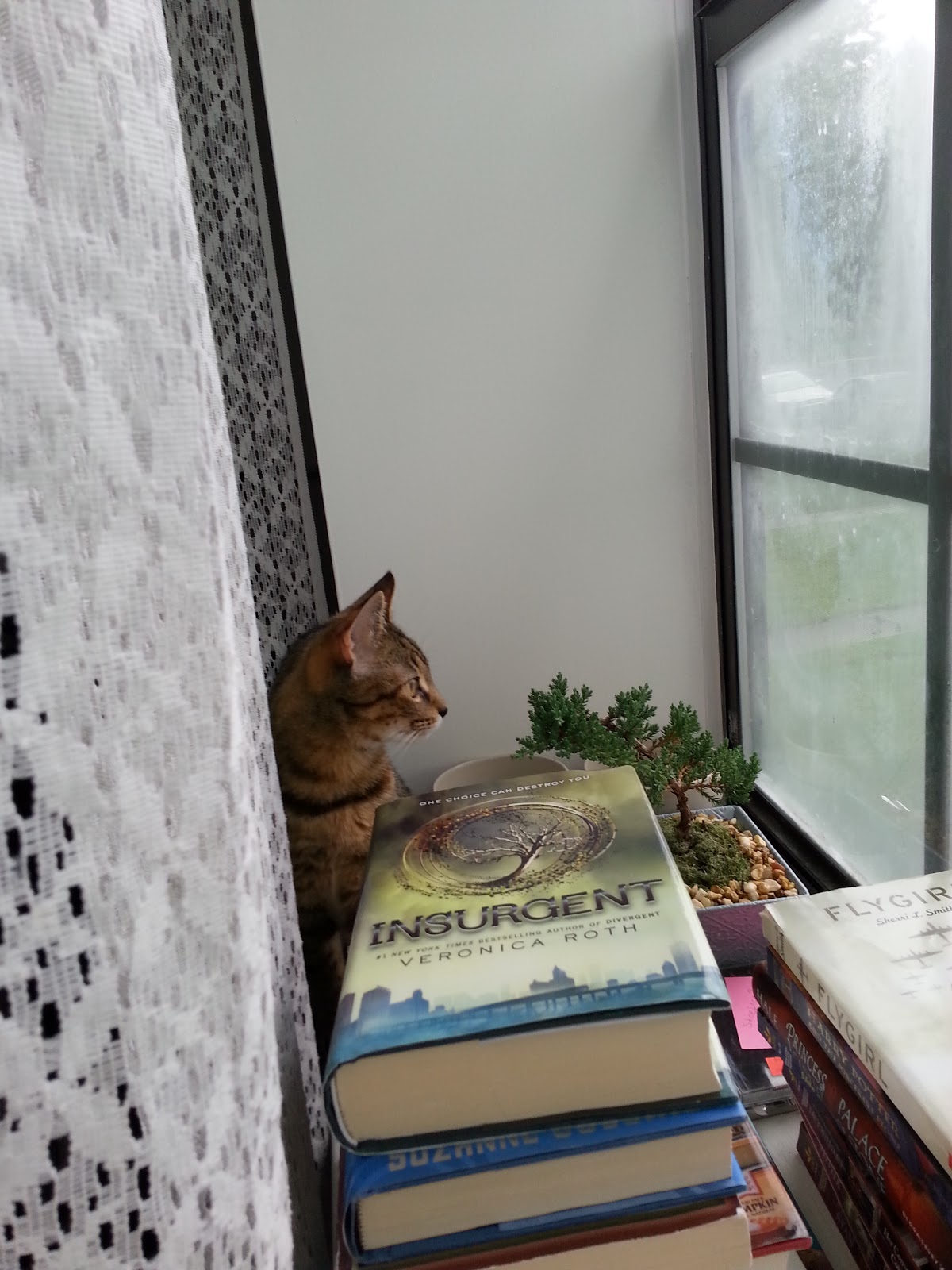
Minerva watching it rain while trying to ignore a bonsai tree I was trying (and failed) to keep alive.
So the last couple weeks, I put in a decent amount of time as the Region A medic. I missed the lunar eclipse (which was also a full blood moon) because well, as folklore says, wild things happen on the night of the full moon. I was so busy running calls and writing my reports that when the clouds cleared I still didn't get a chance to see it. The theme of my last couple weeks seems to be responding for complaints of "chest pain."

Current medical practice in response to chest pain is very different from what it was 50 years ago. Fifty years ago, if you started having chest pain and you picked up the phone to call someone to take you to the hospital, you probably would have dialed your neighbor's house instead of 911.

I think that comparing the chest pain protocol suggested by the American Heart Association with common practice in 1965 might be enlightening. Please note that different jurisdictions have different protocols and may prefer to use different medications. This is normal, but the goal is the same. (And to anyone in the medical field who reads this, feel free to message me if I get something wrong. I'm happy to make corrections).

Let's start with some terminology: the medical term for a heart attack is an Myocardial (My-O-Car-Deal) Infarction (In-Fark-Shun) which is abbreviated to MI. When someone has a major medical event of any kind, we typically monitor their heart activity with an Electrocardiograph (Electro-Cardio-Graf) machine which is abbreviated either as EKG or ECG. There are two kinds of MI: ST-segment Elevation MI called a STEMI (I pronounce it Stem-Ee) and Non-ST-segment Elevation MI, or NSTEMI. I'll discuss the meaning of the ST-segment later.

And no, I don't expect you to remember all this. I also don't expect others to be as fascinated with cardiology (the study of the heart) as I am. 

Diagram of a myocardial infarction (2) of the tip of the anterior [front] wall of the heart (an apical infarct) after occlusion [blockage] (1) of a branch of the Left Coronary Artery or LCA. In the diagram, RCA is the Right Coronary Artery. [Diagram found on Wikipedia.][1]

My protocol dictates that when the patient I've been dispatched to help complains of chest pain, that patient is instructed to take 4 baby Aspirin if available. When I arrive, several things should happen quickly: somebody gets a set of vitals, and I get a 12-Lead EKG reading. Vitals consist of blood pressure, pulse, oxygen saturation, respiratory rate, listen to the lungs and check skin condition (because if the patient is pale, cool and sweaty, it tells me a lot about how sick they are). The 12-Lead is kind of like an electrical picture of the heart taken from 12 different angles. If the patient's blood pressure is above a certain number (and the 12-Lead isn't showing lack of oxygen to the right side of the heart), I will administer the first of up to 3 doses of nitroglycerin and transmit the 12-Lead to the ED for the doctor to look at. If the patient's oxygen saturation is below 94%, I'll have someone put the patient on a little bit of oxygen. At this point I typically like to move everyone to the back of the ambulance because I can do everything else in the ambulance on the way to the ED.

An MI is truly an emergency. The longer that area of heart muscle goes without oxygen (take a look at that diagram above again), the more permanent damage to the heart there will be. So this is one of the cases where I try to keep my time on scene short and sweet. Once in the ambulance with an emergency like this, I have to get vitals every 5 minutes (that's my EMT's job if I have one in the back with me), start an IV, radio the hospital to let them know that they're getting a STEMI, get a follow-up 12-Lead if possible, administer the other 2 doses of nitroglycerin if appropriate, and if that does not help the patient's pain, give morphine. And meanwhile, I'll be talking to the patient and my crew, asking for this or that, and trying to keep everyone calm and as comfortable as possible. If it's a long transport or something important changes en-route, I'll call the ED again to give them an update or to ask the doctor for orders. Oh, and did I mention the paperwork? I have to get patient information for my report and so I have it to give to the hospital so they can register the patient when we arrive.

If you're wondering how I know if the patient is having an MI, it's a combination of the patient's symptoms and my lovely little 12-Lead EKG. There's a whole science to reading and performing those 12-Leads too. First, not all MIs will show up on the 12-Lead EKG. However, most will show up on the EKG, and most of those that don't initially show up on the EKG will show up in the lab test the doctor will run once we get to the ED. And there will always be some that are never discovered--because that's just the way life is, right? The ones that show up on the EKG in the field are typically the ones that I'll be the most worried about. Especially if the patient looks really sick.

If you're curious, here's an example of a 12-Lead done on patient's having active MI's.

Check Anesthesia UK's website for full article "Ischemic Heart Disease"
http://www.frca.co.uk/article.aspx?articleid=100690 
Check Anesthesia UK's website for full article "Ischemic Heart Disease" 
http://www.frca.co.uk/article.aspx?articleid=100690 

Each segment of the heart beat tracing has a letter name.

So when you look back at those 12-Leads, do you see that little portion between the S-wave and the T-wave? In a normal EKG, that little line is parallel with the baseline. But wait, it's NOT on the baseline in some of those tracings. It's either above or below. When it's above the baseline, we call it ST-elevation. When it's above the baseline in several leads that are from neighboring parts of the heart it indicates lack of oxygen to that part of the heart due to a blockage of one (or more) of the arteries (in one or more places) supplying oxygen and nutrients to the heart muscle. And that's why we call it a STEMI.

An NSTEMI is simply where the patient is having an MI but there is no ST elevation in their EKG. NSTEMIs are typically diagnosed by labs run at the ED.

Ever wonder what happens after your local paramedic brings a STEMI patient to the ED? They usually get a couple more medications in the ED that help with preventing more blood clots and then are taken to the Cardiac Catheterization Lab (Cath Lab). In the cath lab, the doctor will place a stent in the clogged artery to allow blood to circulate to that part of the heart again. If that fails, it's open heart surgery and a coronary artery bypass graft. There are an awful lot of people out there running around and living their lives with one or more stents or coronary artery bypass grafts!

Back when the first paramedics hit the streets of America in the 1960's things were different. Medicine has come a very long way in the last 50 years allowing people who would otherwise die the chance for a second lease on life.

As fall hits full swing, the plants in my garden are hanging on. Several of them have new growth. I love seeing the new leaves mixed in with the colorful ones that are falling from the trees. My front porch doesn't look as pretty as some of the back roads around here.


So take a few minutes to step outside and enjoy the weather and thank God for the weather and the beauty of the world.


Friday, May 15, 2015

A Day (Or Night) In the Life of a Volunteer Paramedic (Part 1): Typical Shift At The Rescue Squad

I was recently asked by a member of the public what a typical day is like for me. That is such a hard question to answer because each shift is so different. Being a bit of a smart aleck, I asked them "what day?" I work a rotating 24hrs on/72hrs off schedule with the private ambulance transport company. My volunteer paramedic schedule of 12hr shifts is set up around my work schedule. I prefer running as the Region A medic on Sunday and Monday nights. Sometimes I run Sunday days because I can take the chase car to church and respond from there. I also volunteer with the Fire Company which is separate from the Rescue Squad. Fire duty crew is a 12hr shift every 6th night. I work holidays, am out in all sorts of weather and I don't know what a "weekend" is anymore. And I haven't even started on the regular continuing education classes I have to take to keep my certifications current.

But let's give this a try. Let's assume that I'm on duty at the volunteer rescue squad as the regional medic. The shift begins at 6pm, but since everything in fire-rescue goes off 24hr clock time, it's actually 1800. I usually leave home at least an hour before the start of my shift to allow for travel time with rush hour. If it's one of the days when my roommate is working night shift and won't be home to take care of the pets I leave earlier so I can drop my dog Fiona off for a sleepover at a friend's house.

Well, she's already asleep in the car. Apparently, Fiona was more than ready for a sleepover while I'm on duty.
Once I get to the station, I change into my uniform if I'm not already wearing it and call the county dispatch center to place my unit in service. Then I do a quick duty check to make sure I have everything on the unit and change the battery in the portable radio.

One of the ALS Chase vehicles we used to run from the rescue squad station. Oh, and a helicopter.
Then it's time for dinner. You never know when you'll get a call, so food is always a high priority. Every time you sit down to eat, go to the restroom, start your workout, etc., you feel like you're tempting fate to give you a call. Most shifts, I end up coordinating dinner with the ambulance crew on duty. After dinner, I like to do training of some sort.

Extrication Training
Training can be pretty much anything. If you don't train your skills and knowledge gets rusty. You don't want to be trying to relearn that splinting procedure on a call. Training is important! Two of my favorite evening shift training options are doing area familiarization/driver training and practicing ALS/BLS skills. If you know the shortcuts, major streets and intersections--and even better the addresses, your response times are faster because you already know where you're going. Long summer evenings are perfect for this kind of area familiarization. Practicing skills such as intubations on the dummy, doing a drug bag check (and reviewing the indications, doses and contraindications for all the drugs in the bag), and teaching basic skills to new members are other good options. The more you know, the more you practice, the better you will be under stress in a critical incident. I also try to review at least one of the local protocols per shift. Knowing the protocols is very important, and there are always protocols you don't use very often.

Bunk room at the station. The night this photo was taken, I ran a lot of calls and consequently didn't spend much time in here.
After training, sometimes there is time to use the station gym, work on projects, and watch TV before bedtime. I usually pick a bunk room as soon as I'm done with my duty check and before dinner. And at any point in time, this routine can and will be interrupted by calls. In the area I cover, the average time it takes to run a call once you allow for response time to the scene, an on scene time of about 15-20 minutes, transport time and the return trip to the station (often via the scene to retrieve the chase vehicle) is about 2-2.5 hours. Critical patients require more documentation, so the report-writing time at the ED is longer.

People often ask how busy we are. The truthful answer is that it depends upon the day. Calls seem to come in waves. At one point in time, there will be 4 calls going on at once and I'll be on one and there will be units from 3 other stations on calls in my area. Other days I'll run nothing the entire shift. Some shifts I will run 6 calls and never really see the station.

Another question or rather statement I hear a lot, is "so you're an ambulance driver?" Well, technically, yes, I am. But I'm a whole lot more than an ambulance driver. I'm actually a paramedic. I've successfully completed about 2,000 hours of classroom and practical training, followed by about 8 months of field training before I was allowed to run calls on my own. So, "Yes, Ma'am. But I'm a little more than just an ambulance driver..."

Sunday, July 20, 2014

Creating a Fairy Garden and Picking a Puppy Name

During one of my shifts as the Region A medic a few weeks ago, I stopped by the farmer's market in Purcellville and talked with a couple of the ladies from the Loudoun County Master Gardener's. They recommended a visit to Abernathy & Spencer Nursery off Lincoln Rd. in Purcellville, VA, which is well worth a visit if you love plants. In one of the greenhouses there are a couple examples of miniature gardens. I've always been fascinated by tiny things, and when I was in high school, my brothers and I decided that it would be fun to build an outdoor model railroad and landscape it with small-scale plants. We never did get out of the planning stages.

I did a little research, and found that these kinds of miniature gardens are frequently called "Fairy Gardens" and I decided to make one. My gardening budget is small, and the hardest part of this whole project was finding a suitable container. It needed to be at least 6in. deep and have space for about 10 plants. And it couldn't be very expensive. I visited several thrift shops and came home with a pair of odd-shaped res plastic serving bowls and assorted small dishes and objects that would serve as furniture and tools for the little fairy figure to use in her garden. 

Plants, containers and decorations used in Fairy Garden project


The assembly process took about an hour, more or less. The hard part was figuring out how to arrange the plants so you could see them all and no two of the same kind were precisely next to each other. I think the end result is delightful.

The entire Fairy Garden

Detail of the pond and the fairy herself


The Fairy's house and front yard


In other news, now that I'm finished with Paramedic class (Yay!), I've decided it's time to get a dog. I've always wanted a Border Collie to do obedience competitions, go running and hiking with and play frisbee. I've looked into rescuing one, but given the existing crew of two Welsh Corgis, a Welsh Corgi mix and a large ginger and white cat that my roommates own, it looks like getting a puppy might be the best option to not completely overturn the existing pet social dynamics. So after doing a lot of research, I decided that my best bet is probably to get a female, and while puppies are and insane amount of work, I can start from scratch and train it the way I want. Obviously, digging in my garden, eating my flowers and jumping on the furniture will be taboo. So the aunt of a girl I know from the rescue squad breeds breeds her working Border Collies and competes in dog sports with them. One of her dogs had a litter of puppies the same day I took the National Registry Paramedic written--three boys and a girl. I have first pick of the litter, and I'm planning on adopting the girl.
Further research into traditional Border Collie names has me wondering what to name the little one. Traditional Border Collie names are usually one syllable, often after a natural geographical feature, or the common name of a farm worker. It also needs to be something I'm not going to be embarrassed to say in front of people, and easy to yell across a field. So when we're hiking the Appalachian Trail together and she's running up the trail ahead of me and I need her to come back... Her kennel name is "Daisy" right now. So even though she's going to be a ton of extra work and trouble, calling her "Trouble" is certainly out. I found this nice list of traditional names and decided to pick a few to start with:(http://www.bordercolliemuseum.org/BCNames/BC_Names.html). This is lots of fun...
I've decided to wait until I meet her and get to know her temperament before actually naming her. Still exciting!