Showing posts with label organic gardening. Show all posts

Tuesday, August 2, 2016

Bringing Some Peace & Quiet To The Patio

Materials for my fountain
Last week I spent a few minutes organizing my bookshelves and found some books on water gardening I'd picked up for a dollar at the thrift store. I've always wanted to have a water garden. Something about the sound of running water is really soothing. A little research proved that it's not very expensive to start one. So over the last couple weekends, it happened. 

I started with at trip to the hardware store.  Everything I needed is shown in the photo above: fountain pump, planter bowl, drill (to widen the hole in the bottom of the planter so the cord would fit through), rocks to hide the pump, and of course water (not shown).

I started with at trip to the hardware store.  Everything I needed is shown in the photo above: fountain pump, planter bowl, drill (to widen the hole in the bottom of the planter so the cord would fit through), rocks to hide the pump, and of course water (not shown).

Fountain pump.

The pump I got came with a couple different nozzles to change the spray pattern for the water. Not all of them come with it. There's also different sized pumps depending upon how much water you want to move and how high you want to make it go.

Enlarged hole for the pump's cord.


Step one was to enlarge the hole in the bottom of the pot so I could run the cord for the pump through. This isn't exactly necessary, but I thought it would make the finished fountain look better. I had a rubber plug already fitted around the cord to make the hole water-tight, but not all of them are that way. It is also common to use some sort of sealant to close up the hole around the cord.

Pump placed in pot and hole around the cord sealed with rubber plug

Initial finished fountain
I didn't like the way it looked with just the rocks in this photo because the pump was still visible. I found a wire basket at the dollar store, cut a hole in the center and placed the overturned basket over the pump. This keeps the rocks from blocking water flow to the pump and reduces the amount of rocks I need to hide the pump. I added more rocks until the basket was no longer visible.

Finished fountain!
I'm planning to eventually add plants to the fountain. Until then, I think this will work fine. I have been running the fountain almost once a day and draining the entire fountain and cleaning it to prevent algae from growing.

Fountain in the corner with (L-R): Geranium, White Oxalis, Citronella plant (far back), cactus garden, Purple Oxalis, and Asian Jasmine.
Due to all the turmoil that goes along with a new job, I haven't been able to spend time running rescue or doing paramedic-y things other than working on the re-certification process. Re-certification has to be done every two years in order to maintain National Registry certification. There are a bunch of different topics that you need to receive training in, for a total of 60 hours of training. I have about 8 months to complete 5 hours of training. Easy enough. Until I get back into the field on my own as a medic with my new job, it's time for more garden therapy. Until next time...

Thursday, July 7, 2016

Traveling, Blueberries & Texas Sunshine

So you'd think that after moving just about once a year for the last couple years, I'd learn my lesson and just pick a spot to settle down. Yeah...about that.

It all started about 1.5 years ago when I decided I needed to start looking for a new job (preferably in the medical field or related to it)--one I could spend a career doing. More complex applications than I wanted to count later, I finally got a job offer late last year. Catch was that I had to relocate... Again. I thought about it, but decided to take the job anyway and haven't regretted it yet.

Minerva is helping me pack the Uhaul to move.
So this past month, I got a trailer hitch for my car and installed it with a large amount of help from one of my rescue squad coworkers (for whose help I'm incredibly grateful!). I packed as much of my things as I could fit in a 4'x 8' Uhaul trailer, hitched it up, stuffed my cat into her carrier, and headed down the road. I didn't have much room left for my potted garden.

Minerva all buckled in and ready to travel.
But I managed to find space for my patio blueberry bush and one shamrock. Minerva promptly started trimming the leaves off the shamrock (of course). 

This is Minerva getting to stretch her legs at a rest stop. She obviously was more interested in the outside world than the important business of the litter box.
We saw some truly gorgeous scenery along the way and met up with friends for dinner in Nashville one evening. 

View of the western Smoky Mountains in North Carolina. So pretty, right?
Minerva has to go live with my brother for awhile, since my new housemate is allergic. So we stopped at his place to drop her off and I finally arrived at my new place late that night. She seems to be getting along well with my brother. Her new discovery is the ceiling fan which she hasn't figured out how to swat... Yet.

I love her pose and the look on her face! "It's... It... It MOVES!!!!"
I managed to get in a few shifts at the rescue squad and fire company during the chaos of getting ready to move. 


I didn't get as many calls as I wanted, but that was probably a good thing. The only noteworthy one happened when I was riding backwards on the engine and it was a mess. It was dispatched as a motorcycle vs. car wreck. The first-arriving unit didn't know where they were, so everyone was driving around trying to find the location. We finally arrived to find that a motorcyclist had run into the center of the trunk of a stopped car, throwing the rider through the air to land about 20' in front of the stopped car. The rider managed to get up and make it to the shoulder of the road. Upon arrival, I went to take over patient care, since I was the first medic on scene. Two minutes later, two more medics materialized and assumed patient care without so much as asking who was in charge or what was going on. "Karma" has a way of exacting it's own revenge though. The usurping medics initially made the wrong transport decision, then omitted a key piece of information during their report to medical control and got a verbal (and public) put down over the airwaves from the doc. But "karma" wasn't done yet. Their unit broke down enroute to the trauma center. Yep.

So, Lesson #1-- Know where you are. Keep aware of your surroundings so you can accurately describe your location so help can get to you. It does no good whatsoever if you're screaming for a medic over the radio but the medic has no idea where to find you!

Lesson #2--Don't be rude! When you roll up to a situation (regardless of whether it's fire/EMS related), have the courtesy to find out who is in charge and what is going on. Professionalism is expected of you regardless of whether you're working in your chosen career field or volunteering. Don't act the way the second arriving medics did on my call. I was there, handling the situation just fine, and they brushed me aside without even asking me who I was or what I had. 

Since there's a distinct possibility one of the calls I ran that week involved an impaired driver, let me reiterate another lesson you should already know. **climbs on soapbox**
Lesson #3--Don't drive if you're impaired--exhausted or even mildly intoxicated, it doesn't matter. This past Monday was July 4th, and a lot of people like to kick back, have some fun and drink alcohol of some sort. Or are traveling long distances after a long busy day of celebration. If you're impaired, don't drive. If you're tired, pull over and take a nap--because it's not worth falling asleep at the wheel. Yeah... Which means that your friendly neighborhood medic has mixed feelings about your trip home or wherever you're headed. You could injure or kill an innocent person or yourself. Bad. You could also provide said medic with an exciting new story and opportunity to practice rare skills. I'll be shaking my head at your idiocy and probably your antics. Makes for fantastic stories. But I'd rather not have to scrape anyone off the pavement. So stay safe, take a nap if you need it, stay off the roads, and yeah, stay out of the Emergency Room. **climbs off soapbox and walks into the garden**

That lonely blueberry bush I dragged with me all the way from Virginia has done very well, all things considered. I got it at a nursery sale last year half dead. It survived the winter, and has about three times the amount of berries on it this year as it did last year. And it did all this with me neglecting it all year. I think if I'd pruned and fertilized it, it would have produced more. 

Considering how many miles this blueberry bush has traveled, it looks really good!

I think it has about 6-7 berries left on it because I've been picking them as they get ripe. They were good! 

Blueberry bushes can manage very well in containers on a patio--they do best in bigger containers. They like acidic (pH 4.5-5.5), well-draining soil, and they need lots of water and lots of sun. One article I read was saying that you should regularly monitor the pH of soil in the pot and give a little bit of acidic fertilizer as needed to maintain a low pH and happy plant. They should be heavily pruned each year. Letting the bush grow without pruning tends to result in it overproducing smaller berries. When I was researching how to care for my blueberry bush, most of the instructions I read said to be careful to not over fertilize and use an acidic fertilizer such as one for rhododendrons. 

As far as pruning goes, the consensus seems to be that you need to prune them in the winter or early spring when they first start to bud. First, take out any dead wood. Second, take out any light-colored, less healthy branches in the center all the way down at their base. Third, trim off branches with little to no fruit buds or long with few leaves or branches before the ends. The following article I found was particularly helpful:

While I'm excited about my new job and new state and all, it's kind of sad having to start from scratch on my garden again.  But, it means I can get creative, and work on quality rather than quantity. Speaking of which, I have a new planter to plan right about now.

Sunday, May 1, 2016

Patio Herb Gardening

I know it's been awhile since I posted, but I got a new job a few months back. Consequently, I'm preparing to move again and I've been in training, so I haven't had much time to write. I am happy to report that I have managed to keep a few plants alive despite being extremely busy studying for exams.

These past couple months, the anniversaries of a handful of difficult calls came and went. I've found that memories seem to pick their own time and place to resurface. And it is sometimes difficult to put them to rest. Each time they are brought out of the proverbial closet and worked through, it gets easier to handle. I like to think this process is comparable pruning. Plants are much healthier when trimmed and pruned regularly. And yeah, I prefer to do something constructive while working through things...like gardening. Particularly, working with herbs because they smell so good. Aromatherapy anyone?

One of my favorite planters is my herb box. I started with a light gray plastic window box planter about 5 years ago. The plant arrangement has remained more or less the same since then. I managed to fit four different varieties of herbs comfortably in the box. It isn't my only pot of herbs though.

Gray window-box of herbs in 2012. From L-R:
Lemon Thyme, Rosemary, Parsley and Oregano
Since some of these plants are perennials and some are annuals, I've had to replant the ones that die each year. For home cooking, here's a rundown on six of the most useful herbs to grow.

Thyme: Thyme is an annual (meaning it has a seasonal life cycle and dies after it's flowered and produced seeds), and comes in many varieties. Some of my favorite varieties are Lemon Thyme (lemony smell), Elfin Thyme (tiny leaves and typically used as a ground cover), English Thyme, and Silver Lemon Thyme (which has a silver leaf edges). Thyme likes plenty of sun, hates it when you let the soil get dry and does well when fertilized once a week. I try to trim it pretty regularly and I usually dry whatever I can't immediately use.
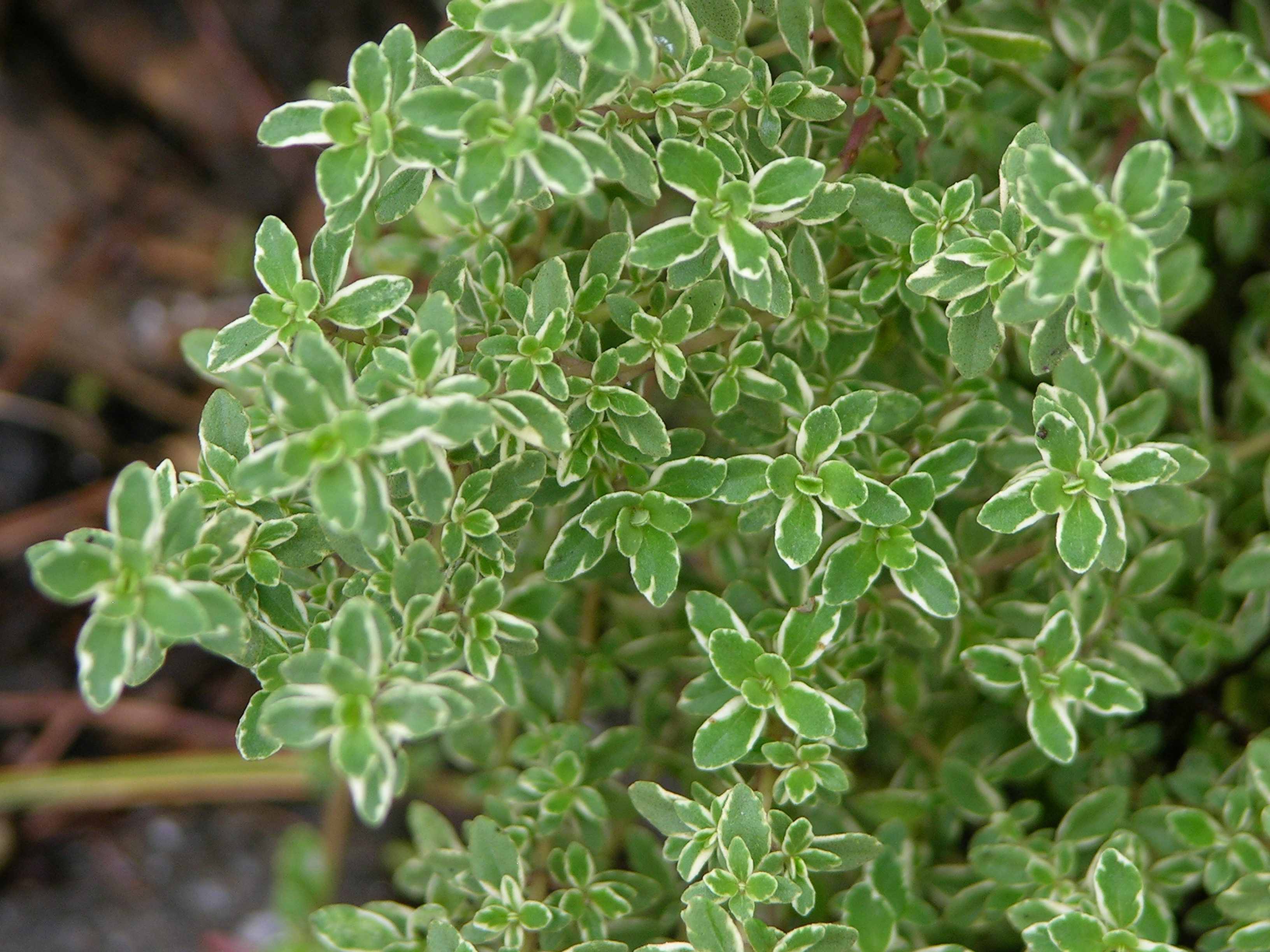
Varigated Lemon Thyme
Rosemary: Rosemary (pictured second from left in the photo of my planter) is a perennial. Perennials have a longer life cycle lasting 2-3 years. Actually, Rosemary can be more of a shrub and is sometimes grown as a hedge. It doesn't like too much water, loves sun, likes to be fertilized regularly and will take over a planter if you aren't careful. Rosemary can be trained into topiary, trimmed into all sorts of shapes and grow into a huge bush 4 feet tall and as big around. It goes very well with chicken, and is awesome in spaghetti sauce. Because a happy rosemary plant grows like a weed, I usually plant it in a small plastic pot and then plant that smaller pot in my planter. This helps keep it from completely taking over my planter. I trim it regularly and usually dry whatever I can't use. The oils in rosemary leaves can sometimes be hard to get off your hands. Dawn dish washing soap works pretty well for that, but I also like to wear gloves if I don't want my hands to smell like rosemary for the next day.

Parsley: Parsley is another annual. It is a versatile herb used to make all sorts of dishes. It isn't quite as strong a flavor as rosemary, and while it loves sun, don't let it dry out. If it dries out (which almost always happens in hot weather since it needs a ton of water), it tends to bolt and be in an awful hurry to produce seeds. Once it bolts, you won't get many good leaves off it for cooking. There are several varieties of parsley, but the two I've seen most commonly are those with a flat leaf or a curly leaf. I prefer to grow the flat leaf variety since I find it a lot easier to wash all the dirt off the flat leaves. Parsley is also the host plant for many swallowtail caterpillars. While swallowtail butterflies are beautiful, I don't like having my parsley eaten by somebody other than me!

This is Italian Flat-Leaf Parsley from  the Bonnie Plants website: https://bonnieplants.com/product/flat-italian-parsley/.
Oregano: Oregano belongs to the mint family and I think it is considered a small shrub. It's definitely a perennial--my current plant is several years old. It is a key ingredient in Italian dishes. I've tried several different varieties including Greek (very strong flavor), Italian, Golden (yellowish leaves) and Varigated (silver edges).  I prefer to grow Italian Oregano because I like the flavor. Oregano will tolerate you letting the pot get dry, but it definitely prefers getting water regularly. Fertilizing and regularly trimming it back (especially when it wants to flower) allow you to harvest the leaves for a longer period of time.

Basil: Basil is another annual that tends to bolt if it's pot dries out. Regular watering, fertilizing, trimming and TLC will make this fragrant herb quite happy. Since it's life span is shorter than most of the other herbs I grow, I like to keep a separate pot with multiple varieties of basil. Some of my favorite basil varieties are Purple, Cinnamon, Thai, Lemon, Lime, Spicy Bush (bushy plant with lots of small leaves), and Sweet Basil (the plain kind). I trim my basil plants every other week or so and dry anything I can't use right away.

Purple, Thai and Spicy Globe Basil 
Chives: Chives are another of those perennials that will be around forever if you take care of it. It likes plenty of water and sun and being fertilized once a week. Chives are a member of the onion family and the hallow leaves are picked and used for a dainty onionish flavor. I don't trim or dry my chives, although you can do both. I prefer to pick only the largest leaves when I want to use them for cooking. I usually thin and re-pot my chives once a year.

Chives (front and center)


Did I mention that my cat loves to play in my herb garden? She makes a mess but smells really nice when she's done.
Minerva used to be soooo tiny! And she is most certainly up to no good...

Tuesday, May 12, 2015

Patio Garden Therapy

Late last summer, the garden and I moved…to a bigger patio about 8 miles down the road. There’s no space for an actual garden bed here and the management is really particular about what is on your patio. So I’m making do with a few more pots. I also had to get a storage bench to hold my gardening stuff. Not that there’s anything wrong with more pots, beautiful flowers, or a nice reading spot in the middle of them…

Rocking chair and patio tomatoes...and the lovely Fiona with her frisbee.
Back in March, my “black cloud” showed up again, and I ran a series of tough calls. It didn’t seem to matter if I was riding backwards in the bucket seat on the engine, covering as the Region A medic, helping a friend with driver training in preparation for EVOC or having another insanely busy day working at the ambulance transport company. It all began with a code that went out a couple miles from the station Wednesday night.

Every new medic needs at least one confidence-building critical call, where given all the variables everything goes pretty much like clockwork. I’d come down to the station to take one of the new members out in the second out (unstaffed) ambulance for pre-EVOC driver training. Just as we were about to head out, the station tones dropped for a cardiac arrest and an EMT/driver walked in and asked if I wanted to take the call. A quick check showed that we were much closer to the scene than either of the two medics initially dispatched and the first out unit wasn’t at the station. So I grabbed my drug keys, we squirreled it and arrived on scene just after the engine and before all the other EMS units. I grabbed the drug bag, walked in and handed out work assignments to the crew to facilitate the “pit crew method” I heard about at the EMS Today Conference earlier this year. From there it went like clockwork. The patient started in asystole and when we reached the ED 10mg of Epi and 50mEQ Sodium Bicarb later the patient was still in asystole and the doc called the code. Unfortunately, asystole (aka flatline or no heart rhythm at all) is the stablest rhythm of them all.

The next day I was at work, and it was one of those really busy days. One of my patients that shift was a tiny premature baby who had developed necrotizing enterocolitis. Necrotizing enterocolitis is the death of tissue in the intestine and occurs most often in premature or sick babies with a 25% mortality rate according to the National Institute of Health.[i] I checked with the doc in the Peds ED the next week and he confirmed that thankfully this little one was treated in time and survived.

A dressed up patio storage bench turns this corner of the patio into an inviting place to relax outside.
Mama ducky is admiring that orange Gerbera daisy too. 
The next night, after a busy day acquiring the patio storage bench, I had fire duty. Riding backwards on the engine can be fun and a nice break from bossing a medic unit... until you get dispatched on that 2:50am stabbing three doors down from the firehouse, are the only medic on the engine and are first on scene after the police. We did everything we could. This patient's wounds were too severe and he practically bled out in front of us and in the end did not survive. The calls where a patient starts out talking to you and ends up dead are the worst. This one was particularly difficult due to the circumstances.

Needing some version of therapy after those calls, and now that spring had arrived, I started working on the garden again. I still have a few pots I haven’t planted yet. Between turning an old bookshelf into a potting bench and acquiring a storage bench/seat per request from the management company, the patio has become a lovely place to read and work.

New job for an old bookshelf: potting shelf.
The rest of the garden is still in the works, but I have squash, beans, cucumbers and a variety of herbs and flowers growing.

Planter of Basil varieties and the lonely Zucchini plant.

When you spend a significant portion of your time caring for ill, injured and dying people, it's nice to be able to come home and care for something healthy and alive.
Green Beans.
Cucumbers and trellis.

I like to daydream about God being the supreme gardener. He has more plant varieties than I could ever dream of...and He's got the whole universe to grow them in. But you can also think of gardening as an analogy for life. Any gardener knows that caring for a garden requires weeding, thinning, pruning and re-potting. God does the same for our lives. We may not know the master plan for the garden, but He does. And in the end, He works everything together for our good and His glory-- even though we may not see it at the time. In the end, God is the one who gives and takes life. I've gotten to see a decent share of both recently. It's a good reminder that it is a privilege to be alive. Use your time wisely and don't take it for granted. We never know when our time on earth is up. Don't waste your life.

Citronella, Violas and Oxalis (shamrocks) decorating a corner of the patio.
For me, that means doing my job at work or as a volunteer to the best of my ability and then coming home and taking care of my garden... and spending time playing with and training my dog Fiona.

Fiona at 9 months
Besides, who knew Border Collies loved to swim?

Yep...she's out there swimming after a stick.

[i] http://www.nlm.nih.gov/medlineplus/ency/article/001148.htm

Sunday, July 20, 2014

Creating a Fairy Garden and Picking a Puppy Name

During one of my shifts as the Region A medic a few weeks ago, I stopped by the farmer's market in Purcellville and talked with a couple of the ladies from the Loudoun County Master Gardener's. They recommended a visit to Abernathy & Spencer Nursery off Lincoln Rd. in Purcellville, VA, which is well worth a visit if you love plants. In one of the greenhouses there are a couple examples of miniature gardens. I've always been fascinated by tiny things, and when I was in high school, my brothers and I decided that it would be fun to build an outdoor model railroad and landscape it with small-scale plants. We never did get out of the planning stages.

I did a little research, and found that these kinds of miniature gardens are frequently called "Fairy Gardens" and I decided to make one. My gardening budget is small, and the hardest part of this whole project was finding a suitable container. It needed to be at least 6in. deep and have space for about 10 plants. And it couldn't be very expensive. I visited several thrift shops and came home with a pair of odd-shaped res plastic serving bowls and assorted small dishes and objects that would serve as furniture and tools for the little fairy figure to use in her garden. 

Plants, containers and decorations used in Fairy Garden project


The assembly process took about an hour, more or less. The hard part was figuring out how to arrange the plants so you could see them all and no two of the same kind were precisely next to each other. I think the end result is delightful.

The entire Fairy Garden

Detail of the pond and the fairy herself


The Fairy's house and front yard


In other news, now that I'm finished with Paramedic class (Yay!), I've decided it's time to get a dog. I've always wanted a Border Collie to do obedience competitions, go running and hiking with and play frisbee. I've looked into rescuing one, but given the existing crew of two Welsh Corgis, a Welsh Corgi mix and a large ginger and white cat that my roommates own, it looks like getting a puppy might be the best option to not completely overturn the existing pet social dynamics. So after doing a lot of research, I decided that my best bet is probably to get a female, and while puppies are and insane amount of work, I can start from scratch and train it the way I want. Obviously, digging in my garden, eating my flowers and jumping on the furniture will be taboo. So the aunt of a girl I know from the rescue squad breeds breeds her working Border Collies and competes in dog sports with them. One of her dogs had a litter of puppies the same day I took the National Registry Paramedic written--three boys and a girl. I have first pick of the litter, and I'm planning on adopting the girl.
Further research into traditional Border Collie names has me wondering what to name the little one. Traditional Border Collie names are usually one syllable, often after a natural geographical feature, or the common name of a farm worker. It also needs to be something I'm not going to be embarrassed to say in front of people, and easy to yell across a field. So when we're hiking the Appalachian Trail together and she's running up the trail ahead of me and I need her to come back... Her kennel name is "Daisy" right now. So even though she's going to be a ton of extra work and trouble, calling her "Trouble" is certainly out. I found this nice list of traditional names and decided to pick a few to start with:(http://www.bordercolliemuseum.org/BCNames/BC_Names.html). This is lots of fun...
I've decided to wait until I meet her and get to know her temperament before actually naming her. Still exciting!

Thursday, April 24, 2014

On Thomas Jefferson, Peas, and Getting Called Out of Church

I remember reading that Thomas Jefferson was an avid gardener (of course his garden was gigantic compared to mine!). One of his favorite vegetables was English Peas and he had a friendly competition with his neighbors to see who could have the earliest ones. So I looked it up--he grew 15 different varieties! (Check it out here: http://www.monticello.org/site/jefferson/fun-fact-peas). I planted peas this year, on April 5th. Too bad I only have space for one variety. And they started poking their little leaves up April 16! I meant to take a picture several times, but kept getting distracted and forgetting.

I did not forget to take pictures of the cherry blossoms in Washington D.C. this year. Unfortunately pictures like the one below cannot do them justice.

This particular tree in full bloom was located next to the tidal basin near the Jefferson Memorial.
I've been enjoying the privilege of being the regional medic and having a chase vehicle. It means that if I run on a Sunday day, I can take the ALS chase car and go to church.  I take a radio or minitor and my phone, turn the volume down as low as I and sit near the back so I can get out fast without disturbing too many people. Unfortunately this plan has backfired on me a couple times and I have had to leave the service rather abruptly. Like on Palm Sunday.

I heard that one go out about halfway through the sermon. It was for a hand injury--initially BLS. Some guy was doing training and got the tip of his finger pinched off. I had a feeling I'd be going on that one and sure enough, they called for ALS. Nothing really I could do when I got there. It was a frustrating call on numerous levels. Turns out the hand doctor was not able to reattach his fingertip. Oh well. You win some and you lose some. All you can do is your job to the best of the ability God has blessed you with.

Have had some "good" calls the past few weeks. Let's start with the typical definition of a "good call" from the medic's standpoint. A bad call is one where things do not go smoothly. And average call is one where things go well, but the reason you were called is not notable. Like getting that 3am "I stubbed my toe 4 hours ago" or also at 3am "I've been short of breath for 3 days and nothing has changed but it's now an emergency because I can still talk your ear off non-stop for 5 minutes without getting short of breath" call. Yeah. Then you have calls where the illness or injury is genuine. That finger amputation call was good except that things on scene were a bit messy. Seems like I've been going through a steep learning curve after being released.

For example, there was the first time I gave pain medication after being released. This tough little lady fell off her horse in the middle of a field. The ambulance got there first and if a) someone hadn't showed me where to go and b) the ambulance crew hadn't been standing right next to her, I would never have found her. The grass was at least a foot tall and you couldn't see her. She'd broken her ankle. It was extremely painful, swollen and deformed. I wasn't able to completely remove her boot and there really was no good way to splint it. I started my IV and gave her pain medication out there in the deep grass. Unfortunately it didn't do her much good. We eventually got her to the hospital and even three doses of pain medication later it barely took the edge off her pain. In all honesty, she warned me she had a high tolerance for pain medication. I wish I could have managed to splint her ankle better, but she refused to let us touch it and it was going to take us forever on scene. I have a feeling it would have helped with the pain though. Next time.

So much for that. Been rather busy with hospital rotations for paramedic class lately. Speaking of paramedic class, I'd better get going. More homework to do.

Friday, March 21, 2014

Spring Cleaning, Shamrocks and Drug Keys

So spring finally happened. It came much later than I would have liked. Not that I wasn't enjoying winter, it's just that I finally got really tired of being cold all the time. I mean, how could one not enjoy this?!

The famous Rescue Squad snowmen in the making.
Almost done, just needed a few more finishing touches.
Finally done. See?! Poor snowman got impaled by a dead tree branch and had to be rushed to a trauma center by the snow medics for emergency surgery. They've done everything right to include exposing the injury, using full spinal precautions and placing the patient on O2. The patient was too cool for all this and insisted upon wearing his sunglasses during the trip. :-)

I've been so busy with precepting out as a medic in Loudoun that I really haven't had much time to work on my garden. But the hard work and time paid off--On March 17, I was finally released by the EMS council and I was finally issued a pair of shiny new drug keys! I was working the day they were issued, and I was incredibly excited and so worried that I wouldn't get them right away. The medic who was supposed to get them to me was flying out at 6 am the next morning and work was super busy--and I had a rescue squad shift the next day. If I wasn't able to catch up with him that evening, I'd have to wait until the end of the week to get them. I shouldn't have been so worried. I managed to meet him at the ED while I picked up yet another patient going to Fairfax Hospital and  I was finally officially a released Loudoun County medic!

My new keys...and well used PTS ambulance. ::huge smile::

Since I've been so busy and it's been so cold, I haven't done much with the garden yet. We've had some interesting things going on--namely the pipes in the apartment complex froze and broke at the beginning of January. Since we live on the ground floor, all the water naturally drained into our place. We were living out of a hotel room for about 3 months and almost all my plants died. Spring cleaning was fun--moving back in and trying to get the remainder of the flood damage cleaned up.

So I acquired a new plant to start the garden back up again.


It's a little shamrock plant--Oxalis to be more precise. It has beautiful white flowers and so far has been rather tolerant of not getting watered as regularly as it should. Something about me being very busy with paramedic class homework and rotations. Speaking of which...I'd better get busy.

Monday, February 3, 2014

Choosing Plants is Easier than Choosing a New Car

Last week through an unfortunate series of events, my car was totaled in an accident. So I've spent a good portion of last week when I wasn't doing rotations or precepting searching for a new one. By the time church got out this morning and it was time to go back into car shopping mode, it was the last thing I really wanted to do. I honestly thought I knew what car I wanted to get earlier this week. Now I'm not certain.

Turns out that car shopping and plant shopping are somewhat similar. I need a car that I can afford without a big loan, is reliable, gets good enough gas mileage so it won't break the bank when I have to fill it up every week, has excellent safety ratings, low maintenance costs, does well in snow... In addition, I want a car that handles very well--turns tightly, accelerates and slows down well, and has a a sunroof and manual transmission. I still don't know what I'll end up with--essentially it's all going to depend upon availability and price.

Choosing the plants for my kitchen garden is similar--it usually comes down to availability and the cost of plants and seeds. The varieties you start from seed may or may not survive long enough to make it into the garden, so it often comes down to what the nursery has available. Because I have very little space to work with and watering is such a chore, I have to take those factors into account in addition to the climate region the plants will be living in since I keep them outdoors. Disease resistant and heirloom varieties are usually best. Heirlooms have been around for a long time because they taste good. And diseases and pests can destroy the harvest. I usually choose dwarf varieties because my biggest problem is space.

One dwarf tomato variety I've enjoyed growing and plan to grow again this year (I did not take and do not own this photo) is called Tiny Tim. It's a very compact cherry tomato. Last year I had another dwarf patio tomato that produced tasty golden yellow fruit.


Herbs usually don't take up a lot of space. Planting several commonly used varieties in a window planter that can be pulled inside during the winter is a great way to A) have a constant supply of fresh herbs, and B) decorate. Here's a photo of my planter from last summer: 

From L to R: Thyme, Rosemary, Parsley & Oregano
In two separate pots I had chives (a perennial) and several different varieties of basil. Plan is to  start by rehabilitating the herb garden next week since it's still too cold out--in between work & car shopping. We'll see how well that goes...

Sunday, February 2, 2014

The Plant I Didn't Have Space For

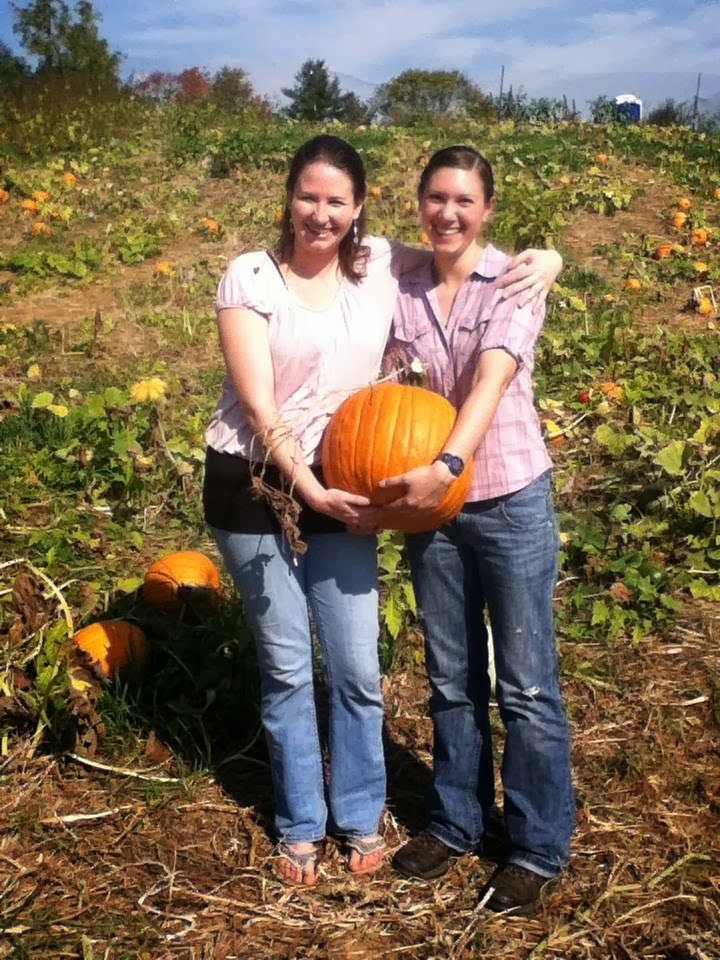
There was one thing I wanted to grow last year that I didn't have enough space for. I wanted to grow pumpkins. Something about growing the popular big orange winter squash for decorating and eating is really satisfying. Unfortunately, pumpkin vines take up an awful lot of space... Oh well. When I was eighteen, my younger sister and I both tried to grow the largest pumpkin for the Los Angeles County Fair biggest pumpkin competition. Her pumpkin was 3 inches bigger around. Mine was 2 pounds heavier. I won the competition because they measured by weight. She was really annoyed!

So this past fall, in between work and medic precepting shifts, I grabbed my roommate and a couple friends I know from the fire station and we took advantage of having local pumpkin farms.


I've never really been into pumpkin carving. I prefer to cook and puree the pumpkin so I can eat it.  But I was doing a favor for a friend at another volunteer rescue squad in my county and each crew gets an pumpkin to carve for a in-station competition. The other medic and I put our heads together and the result was a pumpkin with a Second Degree Type I heart block.


A Second Degree Type I heart block is characterized by increasing distance between the P-wave (the first small bump) and the QRS complex (the big up & down one) until there is a missed beat. I ended up carving a shallow 1/4in wide line in the outside of the pumpkin and then filling it with coffee grounds to make it easily visible.


I still had six pumpkins to use back at home. I've made lots of pumpkin pie but since I had never made pumpkin bread before and none of my cookbooks had a recipe, I looked online and found this wonderful one: 


theme
Downeast Maine Pumpkin Bread
recipe image
Rated:rating
Submitted By: Laurie Bennett
Photo By: DetectiveL
Prep Time: 15 Minutes
Cook Time: 50 Minutes
Ready In: 1 Hour 5 Minutes
Servings: 24
"The classic moist pumpkin bread from Down East is spiced with cinnamon, ginger, nutmeg and cloves. This bread improves with age, so plan to make it a day ahead if possible."
INGREDIENTS:
1 (15 ounce) can pumpkin puree
4 eggs
1 cup vegetable oil
2/3 cup water
3 cups white sugar
3 1/2 cups all-purpose flour
2 teaspoons baking soda
1 1/2 teaspoons salt
1 teaspoon ground cinnamon
1 teaspoon ground nutmeg
1/2 teaspoon ground cloves
1/4 teaspoon ground ginger
DIRECTIONS:
1.Preheat oven to 350 degrees F (175 degrees C). Grease and flour three 7x3 inch loaf pans.
2.In a large bowl, mix together pumpkin puree, eggs, oil, water and sugar until well blended. In a separate bowl, whisk together the flour, baking soda, salt, cinnamon, nutmeg, cloves and ginger. Stir the dry ingredients into the pumpkin mixture until just blended. Pour into the prepared pans.
3.Bake for about 50 minutes in the preheated oven. Loaves are done when toothpick inserted in center comes out clean.
ALL RIGHTS RESERVED © 2014 Allrecipes.comPrinted from Allrecipes.com 2/1/2014

I made it as directed except for replacing half the oil with applesauce and using 8"x4" bread pans. It turned out very well and I ended up making a big batch and giving it as Christmas presents.

I don't have a plan for this year's garden drawn up yet, but I'm not planning on having a space for a pumpkin vine. It's more cost effective to grow tomatoes, cucumbers and zucchini. 

Saturday, February 1, 2014

Starting a Garden on an Apartment Patio

Everything begins somewhere. My gardening experience started when I was a child helping my mom and younger siblings plant a garden in sunny southern California--where there are two seasons: the sunny season and the rainy season. My medic experience began Spring 2009--not long after I was first one scene when my youngest brother was hit by a car in front of our house and broke his arm.

 I didn't realize how much I'd miss gardening until I left for college in Virginia. Within two months I had a pansy growing on my windowsill. Six months later I had a small herb garden and a long-suffering African Violet. During my second year of college, I started volunteering with a local rescue squad and became an EMT. I loved learning about the anatomy and physiology, but unfortunately, they didn't cover enough of it to satisfy my curiosity. So after graduating from college and volunteer fire school (yay for being a smallish girl in turnout gear kneeling on top of the hose to control it), I got a job with a local ambulance transport company, moved into a small condo with two friends from college, and went to school for EMT-Intermediate Spring of '13 and graduated last summer. Finally I learned more about anatomy and physiology! To help deal with the stress of class, I started running and expanded my small potted garden. My schedule was ridiculous, and I only had a few hours here and there to work on the garden.

Last year, the garden began with a packet of tomato seeds. I found a dwarf tomato variety that was perfect for a pot. This is a different variety, but ended up in a pot on my patio as well.


Our condo is on the ground floor and includes an approximately 8x10 ft concrete patio outside a sliding glass door. There was a small area of grass between our patio and a neighbors patio (3.5x4ft) that I decided to turn into a small vegetable patch. 


As soon as the ground thawed in February, I started by removing the top layer of sod. Turned out there was a 6in layer of gravel 4in beneath that layer of sod...yay. It took me two months to painstakingly pick out pieces of gravel out so I could dig up another 8in of soil. 


Sometime in May, I found a beat up old rocking chair by the dumpster in the apartment complex. It soon had a permanent home on my patio. It was so relaxing to come home after Intermediate class or a long hospital rotation, go for a run on the trail, spend half an hour working on the garden, and then sit in the rocking chair watching the sunset and the fireflies after dinner.


By the end of the summer, I had about thirty-eight pots of varying sizes containing a variety of flowers and vegetables.


I choose to use a mixture of organic and commercial fertilizer and pest control products. They worked for the most part, but I still had a big problem with mealy bugs. A swallowtail caterpillar made it's home in my Parsley and two praying mantises took up residence in the garden in April, and helped with pest control.


 In late June, I started to get my first harvests. The most difficult thing was keeping everything watered. There is no outside hose. So it was a daily thirty-minute chore to haul the requisite eight gallons of water using a watering can (I have two of them: a 1/2 gallon and 2 gallon) from the kitchen sink to the garden. 


By August, the place was starting to get overgrown. The tomatoes were too tall for their stakes--eventually breaking the stakes and my zucchini plants were trying to knock down the little wire fence surrounding them.  

My cucumbers had reached the top of their trellis and were going down the other side. I started giving produce away because my roommates and I couldn't eat it before it went bad.


 By October, pretty much everything I'd planted was done. By then I was precepting as a medic at work and with my volunteer rescue squad, had just begun an Intermediate to Paramedic bridge course and was taking a condensed (8-week) college level Anatomy & Physiology class. The cold weather had killed off most of the annuals, so I left the pots sitting out for the winter.

As soon as the ground thaws enough for me to dig in it, (hopefully later this month) I'll start turning it over getting ready for planting in the spring. I can't wait.